info@brineweb.com
 +91 73599 99453




















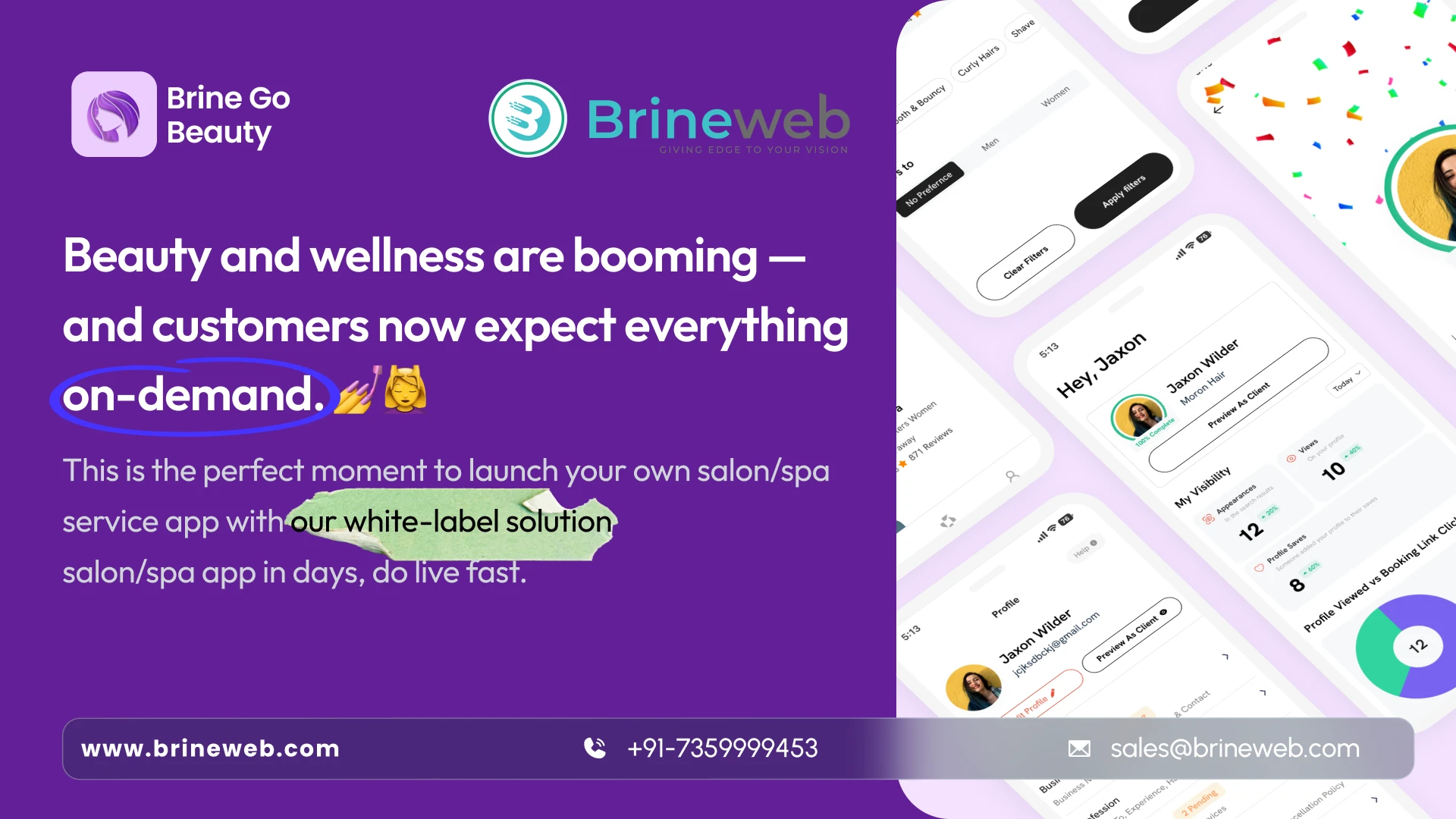
The beauty and salon industry is transforming rapidly. Customers no longer want to call, wait, or depend on walk-ins they prefer booking appointments online, checking availability instantly, and paying through mobile apps.
This shift is pushing salon owners and beauty entrepreneurs toward on-demand salon apps, where customers can book services at home or at the salon with complete convenience.
If you're planning to digitize your salon or start a beauty-tech business, this Salon App Development Guide will show you everything you need features, cost breakdown, technology stack, business models, and strategies to win your market.
Why On Demand Salon Apps Are Booming
The demand for digital beauty services is exploding due to:
- Growing preference for at-home beauty services
- Busy lifestyles that make scheduling difficult
- Customers wanting real-time availability
- Cashless and contactless payments
- Brand loyalty built through digital experiences
- Success of apps like Glamsquad, Urban Company, Styleseat, and Booksy
The beauty industry is expected to cross $200B+ globally, and salon apps form one of the fastest-growing segments.
For salon owners and new entrepreneurs, this is the perfect time to build a salon booking app or home beauty service platform.
On Demand Salon App reduce friction, automate booking, and deliver a seamless customer experience making them an attractive, scalable business.
Business Models for On-Demand Salon Apps
Choose the model that fits your goals and investment.
1. Single Salon App
You own the salon. Users book directly through your branded app.
Best for: Existing salon owners.
2. Salon Marketplace
Multiple salons list on your platform like “Uber for beauty”.
Best for: Entrepreneurs building a beauty-tech startup.
3. At-Home Beauty Services App
Send beauticians to customers’ homes.
Best for: Urban markets and mobile beauty businesses.
4. Hybrid Model (Salon + Home Services)
The most popular and scalable model in 2025.
Essential Features for a Salon App (Must-Have to Succeed)
Your app will serve three user roles: customers, stylists, and admin.
Customer App Features
1. Easy Onboarding
Login via mobile, Google, or Apple.
2. Service Catalog
Hair, makeup, spa, nails, wellness organized cleanly.
3. Real-Time Booking
Users select time, stylist, and location.
4. Secure Payments
UPI, cards, net banking, wallet.
5. Offers & Loyalty Points
Boosts repeat bookings.
6. Order Tracking
For at-home services.
7. Reviews & Ratings
Helps build trust and transparency.
Stylist / Salon Provider Features
1. Profile & KYC Verification
Portfolio, experience, certifications.
2. Schedule Management
Available slots, holiday calendar.
3. Accept / Reject Bookings
Instant notifications.
4. Earnings Dashboard
Daily and monthly income stats.
5. Service Status Updates
Start, ongoing, completed.
Admin Panel
1. Dashboard Analytics
Bookings, revenue, user activity.
2. Add/Remove Stylists
Manage profiles and approvals.
3. Pricing & Commission Control
Dynamic pricing + subscription plans.
4. Offers, Discounts, Coupons
Marketing tools at your fingertips.
5. Reports
For strategy and scaling decisions.
Advanced Features That Improve Conversions
To stand out from competitors:
- AI-based stylist matching
- Salon membership subscriptions
- Virtual try-on (AR makeup & hairstyle preview)
- Multi-location support
- In-app chat
- Push notifications for missed appointments
- Home service technician tracking
These features increase trust and user retention critical for growth.
Step-by-Step Salon App Development Process
1. Research Your Market
Study demand in your city, top services, and gaps in competition.
2. Choose Your Business Model
Salon owner? Marketplace? Home service? Pick one.
3. Plan Your MVP
Start with must-have features; add advanced features later.
4. UI/UX Design
Clean, elegant, easy-to-navigate beauty-centric UI.
5. Mobile App Development
Choose native (iOS/Android) or cross-platform (Flutter/React Native).
6. Backend Development
Secure APIs, booking logic, calendar management, payments.
7. QA & Testing
Functionality, performance, security, and real-device testing.
8. Launch on Stores
App Store + Play Store optimization.
9. Marketing & Automation
SEO, local ads, salon partners, social media reels, referral programs.
Technology Stack for Salon App Development
Frontend: Flutter, React Native, Kotlin , Swift
Backend: Node.js, Laravel, Django
Database: MongoDB, MySQL, Firebase
Integrations: Stripe, Paypal, Google Maps, SMS APIs Twillo
Admin Panel: React / Angular
This stack ensures scalability, speed, and smooth user experience.
Cost to Develop On Demand Salon App
Development cost depends on features, complexity, and region.
The cost depends on complexity, design, and developer location. A basic MVP (Minimum Viable Product) can cost $15,000–$60,000, covering design, app development, backend API, and testing.
A white-label clone app costs around $5,000–$25,000, ideal for startups wanting a quick launch. Custom builds, however, offer better scalability, performance, and long-term brand value.
What Affects the Cost?
- Number of platforms (iOS + Android)
- GPS + real-time tracking
- AR/AI integration
- Multi-location setup
- Admin features
- Custom UI/UX
For entrepreneurs, the smart path is to start with an MVP, validate demand, then scale.
Revenue Models for On Demand Salon Apps
Use multiple income streams to maximize profits:
- Commission on each booking
- Subscription plans for customers
- Featured listing for salons
- Surge pricing on weekends
- In-app ads (optional)
- Home service fees
- Membership & loyalty plans
This mix ensures long-term stability and faster growth.
Challenges & How to Overcome Them
1. Skilled stylist acquisition
Offer high payouts + training + flexible schedules.
2. Building trust among customers
Use ratings, verified profiles, photos, and reviews.
3. Late cancellations
Implement cancellation rules + prepayment.
4. Seasonal demand fluctuations
Use promotions, bundles, and festival campaigns.
Marketing Strategies to Grow Your Salon App
- Local SEO (city-based pages)
- Instagram/Facebook Reels showcasing beauty work
- Partnerships with salons & stylists
- Referral program for users & stylists
- Google Ads + Meta Ads targeting local audience
- Influencer collaborations
- Push notifications for reminders & offers
Marketing is the real engine behind long-term success.
Ready to Launch Your On Demand Salon App?
Whether you’re building a new salon tech startup or expanding an existing beauty brand, Brineweb can help you launch a high-quality, scalable, and revenue-ready on demand salon platform with ease.
Conclusion
On Demand Salon app development is one of the strongest business opportunities in current time, whether you're a salon owner expanding digitally or an entrepreneur launching a beauty-tech startup. With the right features, business model, and strategy, you can build a high-performing platform that customers rely on for convenience, quality, and trust.