info@brineweb.com
 +91 73599 99453
























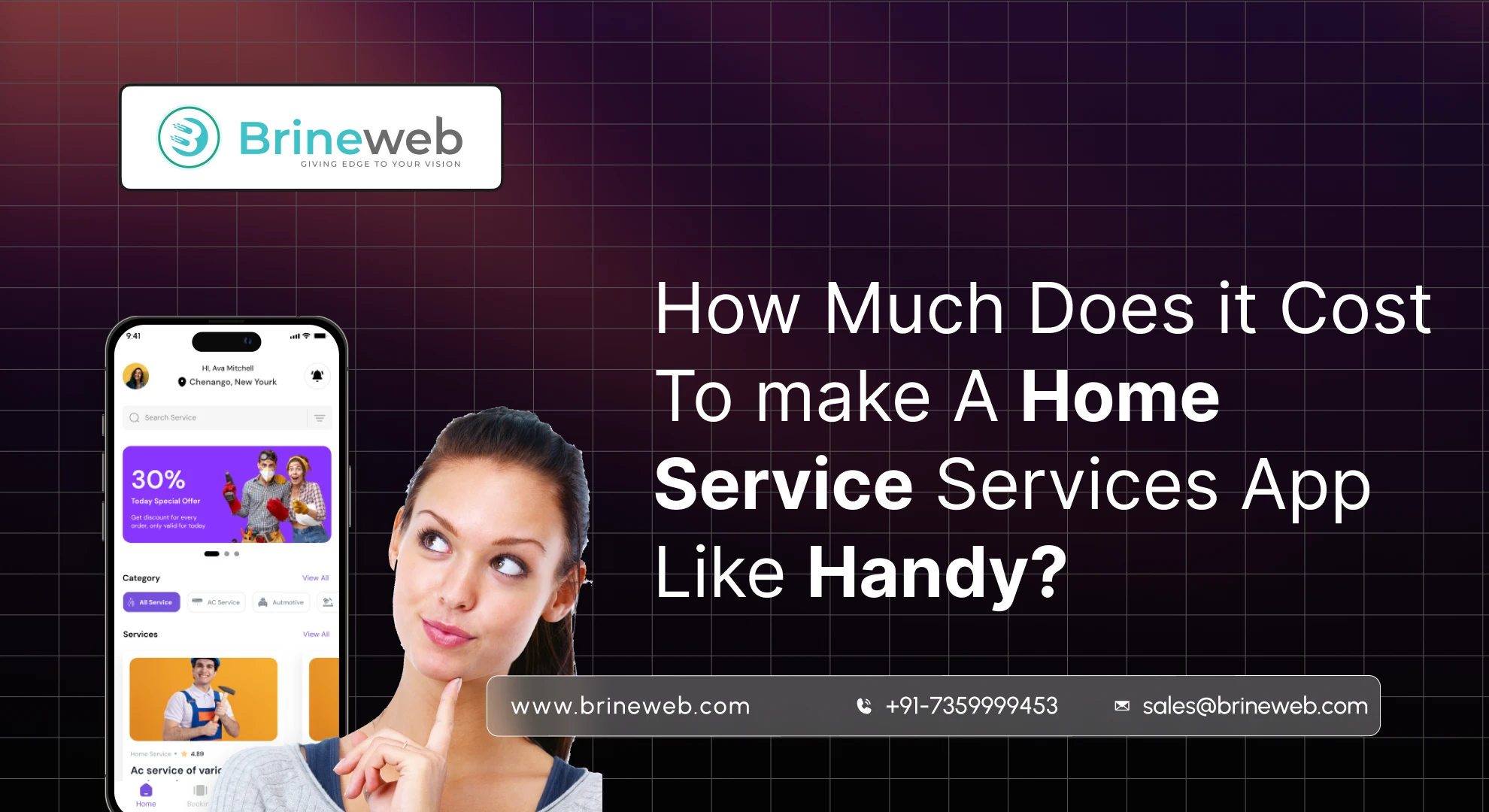
Handy didn’t become a billion-dollar platform because they built an app.
They won because they solved a broken industry problem with technology, automation, and a marketplace model that reinvented how people hire cleaners, plumbers, electricians, and handymen.
Today, if you’re building a home services app like Handy, UrbanClap, or TaskRabbit, you’re entering a market with massive demand, high repeat-usage, and almost unlimited scalability.
Why Home Services Apps Are Exploding?
Every app category has a wave.
Ride-sharing peaked in 2014–2020.
Food delivery peaked around 2016–2023.
Now, the home-services industry is the next giant shift.
Here’s why:
Zero organization in the offline market
Customers still:
-
Search Google
-
Call random numbers
-
Hope someone reliable shows up
This chaos is exactly why people prefer digital platforms.
Home services are repeat-purchase by nature
Users need cleaning, AC service, repairs, pest control, etc. multiple times per year.
High-frequency usage = stable revenue.
No brand loyalty → easy to acquire customers
Users will switch instantly if your pricing, availability, or trust factor is better.
Marketplace apps scale extremely well
A single platform can cover:
-
Too many of service categories
-
Hundreds of professionals
-
Thousands of customers
-
Multiple cities
More people prefer gig-based service models
Professionals want flexible working hours.
Customers want fast service.
The marketplace model solves both.
This means:
If you launch a Handy-style app now, the market is still wide open in most countries and cities.
What a Home Service App Like Handy Actually Includes ?
Handy is not one app.
It is an ecosystem made up of 4 distinct components:
Customer App
Users browse categories, schedule services, pay, and track professionals.
Key features:
-
Category browsing
-
Transparent pricing
-
Real-time availability
-
Scheduling engine
-
Secure payments
-
Chat & support
-
Reviews & ratings
Service Provider App
Professionals manage jobs, schedules, and earnings.
Key elements:
-
Job acceptance
-
Calendar
-
Earnings dashboard
-
Training/onboarding
-
Service categories
-
Availability toggle
Admin Panel
The control center of the marketplace.
Key elements:
-
Provider management
-
Service category management
-
Commissions and payouts
-
Cancellation policies
-
Promotions
-
Dispute management
-
Analytics dashboard
Backend Marketplace Engine
But THIS is what actually determines 40–50% of your development cost.
The backend includes:
-
Service matching algorithm
-
Time-slot logic
-
Pricing engine
-
Provider ranking
-
Cancellation/refund engine
-
Incentive logic
-
Payout automation
-
Multi-city logic
-
Dispute resolution system
The smarter your backend → the more Handy-like your app becomes → the higher the cost.
The Actual Cost to Build an App Like Handy (2026 Pricing)
Let’s skip the generic fluff and give real numbers based on feature complexity, number of user roles, and backend requirements.
Basic Home Services App (Single Category)
$5,000 – $15,000
Examples:
-
Cleaning-only
-
Plumbing-only
-
Handyman-only
Mid-Level Marketplace (5–10 Categories)
$10,000 – $20,000
Includes essential provider onboarding + scheduling.
Full Handy / TaskRabbit Competitor
$20,000 – $80,000+
Includes:
-
Full provider KYC
-
Job routing engine
-
Dynamic pricing
-
Chat
-
Cancellation logic
-
Multi-role system
-
Multi-city model
-
Full admin analytics
Why Handy-Like Apps Cost More Than Regular Apps
A home service marketplace involves:
1. Complex pricing logic
Because every service has different:
-
Skills
-
Durations
-
Tools
-
Requirements
-
Variables
2. Time-slot scheduling systems
You need advanced logic like:
-
Preventing overlaps
-
Avoiding double-booking
-
Managing professional working hours
3. Provider location + availability logic
If a plumber is 30 minutes away but fully booked they shouldn’t appear.
4. Multi-role communication
Customer ↔ Provider
Provider ↔ Admin
Admin ↔ Customer
5. Multi-layer payout system
Professionals get paid after job completion.
Refunds and cancellations require refund logic.
Commissions must be calculated dynamically.
Timeline to Build an App Like Handy
Here’s a realistic timeline:
Basic app: 8–12 weeks
Mid-complexity: 12–20 weeks
Handy-level marketplace: 4–7 months
Essential Features Your Handy-Like App MUST Include to Compete
Customer App Features
Clean category flow
Users need to find services in 2–3 taps.
Real-time availability
No point showing “book now” if no professional is available.
Transparent pricing
Hiding charges destroys trust.
Scheduling engine
Peak times must cost more (surge pricing opportunity here).
Chat + support
70% of cancellations occur due to miscommunication chat fixes this.
Ratings & reviews
A must. Trust is the currency of marketplaces.
Provider App Features
Category skills mapping
Plumbers should never get cleaning jobs.
Calendar management
Allow professionals to block time.
Earnings dashboard
Gig workers love revenue transparency.
Service radius settings
Some providers are only willing to travel locally.
Admin Panel Features
This is the brain of your business.
Provider KYC
Without verification → low trust → low retention.
Commission setup
Be able to change per-category percentages.
Refund system
Needs automation + manual override.
Real-time analytics
Revenue, cancellations, provider reliability score, etc.
Category management
Add/edit services dynamically.
Advanced Features That Put You Above Handy-Level
If you want to truly outperform competitors, add:
AI-based provider matching
Faster, more accurate booking.
Dynamic pricing engine
Peak-hour pricing improves revenue.
Service bundles
Example: Deep Cleaning + Pest Control = 20% off
Subscription model
Steady monthly recurring revenue (Handy does this brilliantly!).
In-app professional training module
Ensures provider quality.
Geo-fencing
Launch city-by-city with control.
Multi-language support
Critical in UAE, Europe, and Asian markets.
This is how you make your platform future-proof.
How Handy Actually Makes Money
Handy uses multiple revenue streams:
1. Commission on every booking
Their biggest revenue stream.
2. Subscription plans
This is Handy’s secret weapon.
Recurring revenue stabilizes seasonal fluctuations.
3. Provider onboarding fees
Helps weed out unserious providers.
4. Surge pricing
Increases revenue during peak hours.
5. Featured provider listings
Sell premium visibility slots.
6. Corporate partnerships
Hotels, real estate companies, facility management.
This is where your app becomes a cashflow engine, not just a mobile app.
Hidden Costs Most Founders Don’t Know About
These will hit your budget if you don’t plan for them:
-
App Store / Play Store fees
-
SMS verification costs
-
Server scaling
-
Payment gateway fees
-
Customer support staffing
-
Provider background checks
-
Professional training materials
-
Maintenance (15–25% per year)
Planning ahead = no surprises.
Final Cost Summary
Here’s the clean version:
MVP: $5,000–$15,000
Growing marketplace: $15,000–$40,000
Handy-grade platform: $40,000–$80,000
Your cost = your ambition.
If you're serious about building a category-winning platform, choose the tier that matches your business model not just your budget.
Conclusion
Creating a house service app like Handy in 2026 is more about trust and execution than just technology. Customers want instant, reliable service. Service providers want steady income and fair treatment. By focusing on verified supply, smooth UX, transparent pricing, and retention programs, you can build a profitable marketplace that scales city by city.
Start lean with an MVP, test your business model, then scale with automation and advanced features like AI-powered matching.
If you were launching a handyman app, which services would you include first plumbing, painting, or furniture assembly?
Drop your answer in the comments and don’t forget to share this guide with fellow entrepreneurs!