info@brineweb.com
 +91 73599 99453


























In December 2012, in Yakutsk, Russia, local taxi companies raised their fares dramatically when temperatures dropped to -40°C. Passengers had no alternative. They had to pay whatever price the app set or freeze waiting for a better option.
A group of local students had a different idea. They created a social media group where drivers and passengers could negotiate fares directly. No algorithm. No surge pricing. No platform taking control. Just two people agreeing on a price that worked for both of them.
That group became inDriver in 2013. Today it operates in over 48 countries, has 175 million app installs, hit 7 million rides in a single day in November 2025, and raised $537 million in total funding with General Catalyst as its lead investor contributing $300 million. It is the second most downloaded ride-hailing app in the world by total installs.
The origin story is not just interesting. It explains everything about how the business model works and why it keeps working in markets where algorithmic pricing consistently alienates the people it is supposed to serve.
What Is inDriver?
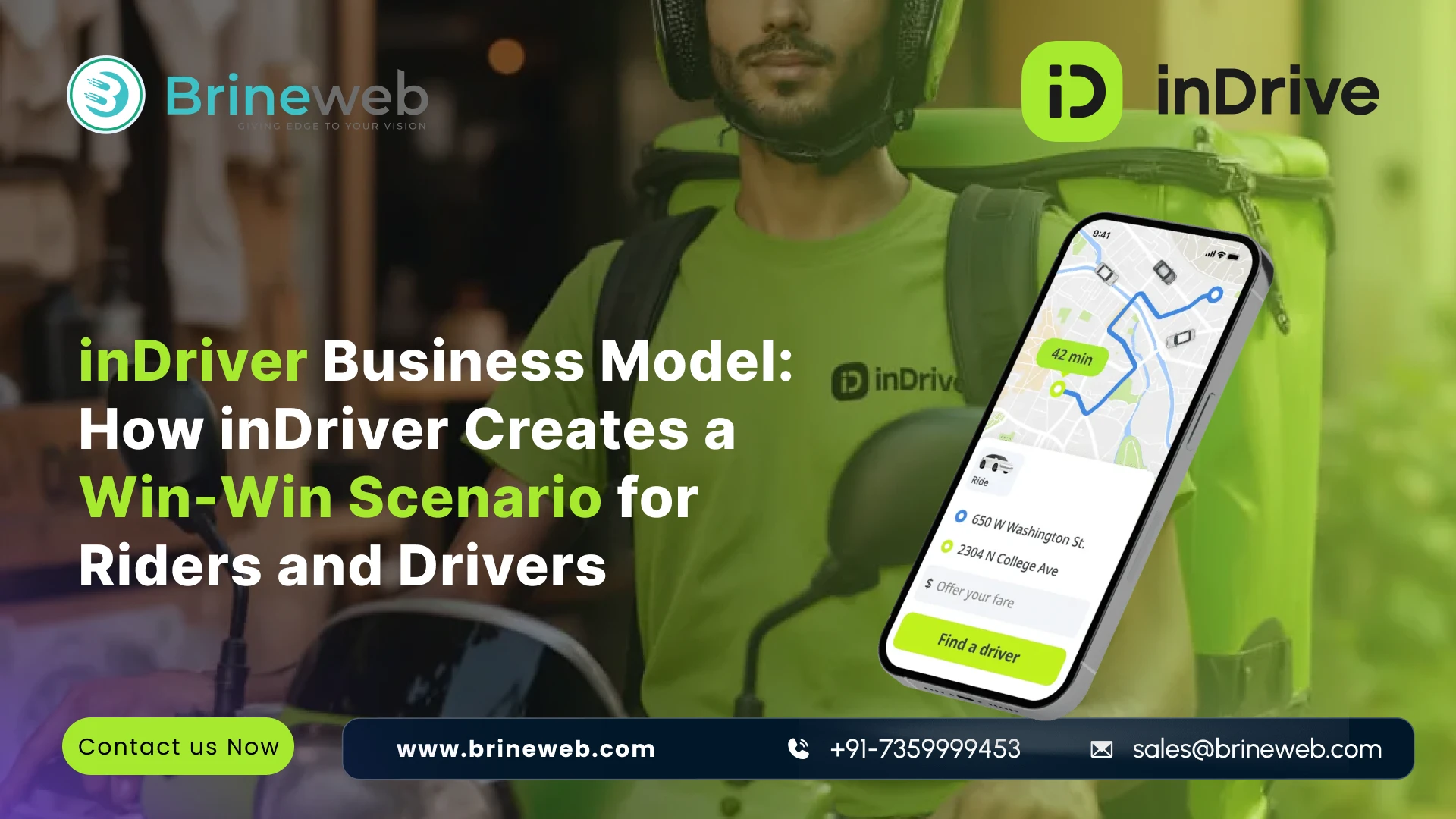
inDriver, also stylised as inDrive, is an international ride-hailing and delivery platform headquartered in Mountain View, California. Founded in 2013 by Arsen Tomsky, it operates on a peer-to-peer pricing model where passengers propose the fare they want to pay, and drivers can accept, reject, or counter with a different price.
This is called the reverse bidding model, and it is the structural decision that separates inDriver from every other ride-hailing platform operating at scale today. Uber's algorithm sets the price. Grab's algorithm sets the price. inDriver asks the passenger to name a number and lets the market decide.
The platform operates in over 888 cities across 48 countries, with particular strength in Latin America, Eastern Europe, Central Asia, Africa, and Southeast Asia. In September 2024, inDriver closed its 5 billionth deal on the platform. By November 2025, it was completing over 7 million rides per day.
The Origin: Why the Bidding Model Was Born
Most ride-hailing platforms were built to solve convenience. inDriver was built to solve fairness.
The pain that created inDriver was specific algorithmic surge pricing during extreme weather in a city where passengers had no alternatives and no say in the price they paid. The founding insight was that price discovery through negotiation, something that happens in every informal transport market in the world, is actually what most passengers and drivers prefer when they have access to it.
This mirrors how BlaBlaCar built Europe's largest carpooling platform from a community of people sharing car journeys and fuel costs rather than through a commercial taxi model. Both platforms started from a recognition that the informal, human-to-human version of transport was fairer and more trusted than the algorithmic commercial version, and both built technology around preserving that human element rather than replacing it.
inDriver digitised negotiation instead of eliminating it. That is what makes the model psychologically distinct from every competitor it faces.
How inDriver Works: The Reverse Bidding Flow
The operational mechanics are simple but meaningfully different from standard ride-hailing.
Step 1: Passenger proposes a fare. You open the app, enter your pickup and destination, and type the fare you want to pay. The app suggests a range based on typical fares for that route, but you choose the number.
Step 2: Nearby drivers see your offer. Drivers in your area receive a notification showing your route, proposed fare, and rating. They have three choices accept immediately, reject, or counter with a higher fare.
Step 3: Negotiation happens in real time. If a driver counters, you see their offer and can accept, decline, or wait for another driver. Multiple drivers can bid simultaneously, giving you a choice of price and rating.
Step 4: Ride confirmed and completed. Once both sides agree, the ride is confirmed. The driver navigates to you, completes the trip, and payment is processed through the app. Both parties rate each other afterwards.
This process makes both parties active participants in setting the price rather than passive recipients of what a machine decides. That participation creates a sense of fairness that shows up directly in retention. Cities with fare negotiation see 25% higher retention compared to fixed-fare markets, which is the clearest evidence that the model is doing something structurally valuable beyond just offering lower prices.
inDriver's Business Model: Peer-to-Peer Marketplace
inDriver operates an asset-light, peer-to-peer marketplace. It owns no vehicles, employs no drivers, and manages no fleet. Its role is to provide the digital infrastructure where negotiation happens, ensure safety through ratings and verification, process payments, and earn a small commission from each completed transaction.
The model is built around three principles that directly address the biggest frustrations in standard ride-hailing platform.
No surge pricing. Because passengers set the fare upfront, inDriver structurally avoids the algorithmic price spikes that generate the most complaint and churn on platforms like Uber. If demand is high, drivers may counter with higher prices, but the passenger chooses whether to accept. Control stays with the user.
Lower commissions than any major competitor. inDriver charges 6 to 12% commission per ride depending on the market, compared to 20 to 30% on Uber and Lyft. In new markets, inDriver often launches with zero commission for the first six months to build supply fast. This makes the platform financially attractive for drivers in markets where giving up a quarter of every fare to an app is a genuine grievance.
Driver empowerment as the mechanism, not the messaging. Drivers who can choose which rides to accept and negotiate fares they find acceptable stay on the platform longer and deliver better service. That supply-side retention is what makes the passenger experience consistently good enough to build 175 million installs.
inDriver's Revenue Model: How It Makes Money
1. Ride Commission
inDriver's core revenue is a service commission of 6 to 12% per completed trip, significantly below the industry average. Ride commissions account for approximately 58% of total revenue.
The commission is low by design. inDriver wins markets through driver adoption by making itself the most financially attractive platform for drivers, then converts that supply advantage into passenger volume, then earns on volume rather than margin per trip. In 2025, inDriver surpassed $2.2 billion in annual gross revenue growing over 35% year over year. At that scale, even a low take rate compounds into substantial revenue.
2. Delivery and Courier Services
inDriver expanded into parcel and package delivery using the same driver network and the same bidding model. Users propose a delivery fee, couriers accept or counter, and the deal is made peer-to-peer. Delivery accounts for approximately 14% of revenue and is growing at over 52% year over year as cross-service adoption increases.
3. Driver Subscriptions
Premium users, particularly drivers, pay a monthly subscription of $5 to $15 for higher visibility in passenger search results, priority booking notifications, and access to analytics tools. This creates predictable recurring revenue independent of individual trip volumes.
4. inDrive Money: Fintech Services
In February 2024, inDriver launched inDrive Money in Mexico, offering cash loans to drivers on its platform. This is the same market reality that drives Rapido's subscription-based SaaS model in India drivers in emerging markets have irregular income, limited access to traditional credit, and genuine need for financial services that understand their earning patterns. A platform that sees every ride a driver completes has better data for underwriting than any bank. Fintech is the highest-margin expansion path available to any gig economy platform, and inDriver is in the early innings of building it.
5. In-App Advertising
With 175 million users across 48 countries, inDriver's advertising surface is meaningful. Brands targeting cost-conscious urban consumers in emerging markets pay for placement within the app. Advertising scales with user base growth at near-zero marginal cost.
6. Zero-Commission Market Entry
inDriver's standard approach to new markets is to launch with zero driver commission for six months. Drivers join because they keep 100% of every fare. Passengers get lower prices because drivers can accept lower offers. Bookings grow rapidly. At month seven, commission kicks in at 5 to 10%, and most drivers stay because the platform has become their primary income source. This short-term revenue sacrifice is the cheapest possible way to acquire supply in any new market, and inDriver has refined it into a repeatable launch playbook.
The Numbers Behind the Business
In 2025, inDriver surpassed $2.2 billion in annual gross revenue, growing over 35% year over year. The platform's valuation crossed $4.8 billion. Total funding stands at $537 million with General Catalyst as the lead investor at $300 million. In September 2024, the platform closed its 5 billionth cumulative deal. By November 2025, daily ride volume hit a record 7 million.
inDriver turned operationally profitable in select markets in 2024. Full-scale global profitability is projected by 2026 as commission revenue grows in mature markets and fintech and subscription revenue lines scale alongside it.
inDriver's Global Strategy: Emerging Markets First
inDriver's geographic strategy is one of the most deliberate in ride-hailing. It targets markets where algorithmic pricing frustrates price-sensitive consumers and where Uber has either not entered or is facing resistance.
The pattern is consistent. Enter a market where price sensitivity is high and driver welfare is poor. Launch with zero commission to build supply fast. Let word-of-mouth spread the fairness narrative. Build a user base that Uber cannot easily reclaim because switching back means accepting higher fares and less price control.
This is why inDriver became the most downloaded app in Pakistan in 2021 and why its Southeast Asian expansion aligns so directly with local market dynamics. If you are building or operating in markets like the Philippines where price sensitivity and driver welfare both matter intensely, our guide to starting a taxi business in the Philippines explains the regulatory and competitive conditions you will encounter on the ground.
inDriver vs. The Competition
inDriver does not try to be Uber. That is its greatest competitive strength.
Grab built Southeast Asia's dominant position by bundling rides, food delivery, payments, and lending into one super-app that deepens user dependency with every service added. Both Uber and Grab compete on algorithmic efficiency, network density, and ecosystem breadth. These models require enormous capital to maintain.
inDriver competes on perceived fairness. In markets where passengers feel surge pricing is exploitative and drivers feel the commission is unjust, inDriver's model is not just an alternative. It is a statement of values that converts directly into retention and word-of-mouth growth.
The contrast with Cabify's premium corporate positioning is equally clear. Cabify wins corporate clients by being more professional than mass-market alternatives. inDriver wins price-sensitive consumers in emerging markets by being more transparent than algorithmic alternatives. Both positions are defensible precisely because neither is trying to beat Uber at Uber's own game.
The Super-App Ambition
inDriver's trajectory points toward a super-app future designed specifically for cost-sensitive markets. In mid-2025, it announced the first super-app rollout in Kazakhstan, integrating ride-hailing, delivery, and grocery ordering with negotiated pricing across all categories. The vision is one app for rides, deliveries, groceries, and financial services, all with peer-to-peer pricing at every step.
In December 2025, inDriver signed an MOU with Ai Driver and the national dealer of WeRide to pilot autonomous ride-hailing in Saudi Arabia. This partnership signals that inDriver's long-term ambition extends beyond expanding service categories into embedding its platform within the emerging infrastructure of autonomous mobility in markets where self-driving technology is advancing fast.
What Founders Building Ride-Hailing Platforms Can Take From This
Algorithmic pricing is a choice, not a requirement. Every major ride-hailing platform uses it because it scales efficiently. inDriver proved that returning price-setting to human hands creates a trust dynamic that algorithms cannot replicate. Before you default to dynamic pricing, ask whether your market wants control or convenience more.
Low commission is a market-entry weapon. Zero commission for six months is the cheapest possible way to acquire supply in a market where every driver already works for a competitor. Once drivers are established on your platform, the switching cost of leaving becomes the loss of rating history, regular passengers, and a familiar interface.
Emerging markets reward patience. inDriver's most loyal user bases are in markets that Uber and Grab ignored or priced out. Competition is lower, acquisition costs are lower, and the first platform to build genuine trust becomes very difficult to displace.
Multi-service expansion multiplies existing supply value. Every delivery routed through inDriver's existing driver network is revenue earned on infrastructure already paid for by the ride business. Before acquiring new supply for a new service category, ask whether your existing supply can handle it at minimal incremental cost.
When deciding how to build your platform, the choice between custom development and a proven white-labeled foundation directly shapes your timeline. Our clone app vs custom app development guide gives you a clear framework based on your stage, budget, and market timeline.
Challenges inDriver Faces
Global profitability at full scale is still ahead. Sustaining low commissions across 48 countries while building fintech and super-app infrastructure requires ongoing capital. The zero-commission launch strategy is brilliant for growth but expensive when running simultaneously across multiple new markets.
Safety in peer-to-peer settings. When passengers and drivers negotiate directly, the platform's role as safety guarantor becomes more critical. An incident in a market where inDriver is the dominant platform damages trust faster than where alternatives exist. Safety investment must keep pace with expansion speed.
Regulatory complexity across 48 countries. Each market brings different rules on driver classification, commercial transport licensing, and consumer protection. inDriver's zero-commission entry has attracted scrutiny from governments concerned about unlicensed commercial transport in some markets.
Competition from well-capitalised locals. In every emerging market inDriver enters, it eventually faces a local competitor that copies the low-commission playbook or a global platform that drops prices to match. Network effects built through early market entry are real but not permanent.
Ready to Build Your Own Ride-Hailing Platform?
inDriver reached a $4.8 billion valuation by doing one thing every other major platform refused to do giving price control back to the people using the service. That single structural decision created trust that drives retention, driver loyalty, and organic growth in markets that global platforms consistently underestimate.
The technology behind a ride-hailing platform, whether bidding-based, fixed-fare, or hybrid, covers the same core components passenger and driver apps, real-time GPS matching, in-app payments, rating systems, and an admin console. Brine Go by Brineweb gives you a production-ready, white-labeled platform covering all of these, configurable to your pricing model, branding, and market, ready to launch in weeks not months.
Get a free quote from Brineweb and find out exactly what it costs to launch a ride-hailing platform built for your market and your users.