info@brineweb.com
 +91 73599 99453


























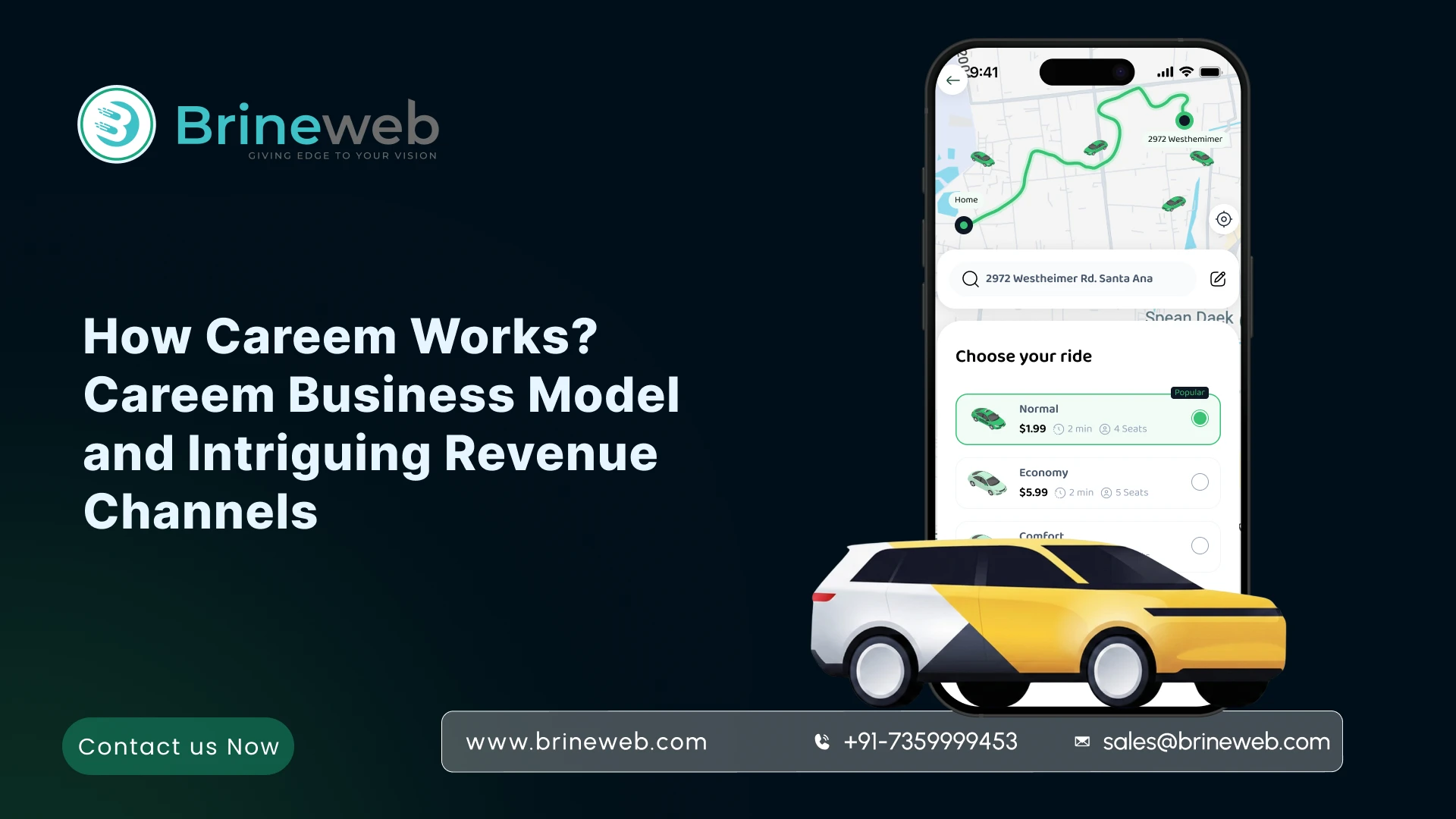
Careem is not just a taxi booking app. It started that way, but today it handles food delivery, bill payments, grocery orders, and more, all from one platform.
If you have ever wondered how Careem connects riders to drivers, or how a company that offers free rides during promotions still turns a profit, this guide answers both questions.
What Is Careem?
Careem launched in Dubai in 2012, founded by Mudassir Sheikha and Magnus Olsson. The company targeted a clear gap in the market. The Middle East needed a reliable, tech-driven alternative to traditional taxis. Entrepreneurs today can follow a similar path by building a ride-hailing app with the right technology partner. Within a few years, it expanded across more than 100 cities in over 13 countries.
In 2020, Uber acquired Careem for $3.1 billion, one of the largest tech acquisitions in the Middle East. But Careem did not disappear. It operates as an independent company under Uber, with its own brand, app, and growth strategy.
Careem now calls itself a super app. That means a single platform where users can book rides, order food, send packages, pay bills, and top up mobile credits. That shift from ride-hailing to super app defines how Careem works today.
How Careem Works for Riders
The rider experience on Careem is straightforward. You open the app, set your pickup and drop-off locations, choose a ride type, and confirm the booking. The app shows you nearby drivers and gives you an estimated arrival time.
Careem offers several ride categories depending on your city. Economy options give you the lowest fare. Business options provide more comfortable vehicles. In some cities, you can book women-only rides with female drivers, a feature designed specifically for regional cultural preferences.
Payment works through cash, credit card, or Careem Pay, the app's built-in wallet. After your ride, you rate the driver and the app records your trip history. Careem also runs a rewards program called Careem Points, where you earn points on every trip and redeem them for discounts.
How Careem Works for Drivers (Captains)
Careem calls its drivers Captains. The name reflects the brand's positioning around professionalism and respect, which resonated strongly in markets where driving for a living carried social stigma.
To become a Captain, you apply through the Careem app or website. You submit your documents including your driving license, vehicle registration, and ID. Careem verifies your background before activation. Once approved, you go online and start receiving trip requests. This model has been adapted across many industries beyond transportation, powering everything from on-demand service platforms for home services to delivery apps...
Captains see the destination before accepting a ride in most markets. They set their own hours and can work part-time or full-time. Earnings depend on the number of completed trips, surge pricing during peak hours, and any bonuses Careem offers for high performance.
Careem takes a commission from each fare. What remains after that commission goes to the Captain. Payouts happen weekly or on demand depending on the market. Some Captains also access Careem-facilitated car financing and insurance products.
The Technology Behind Careem
Careem's core technology is a demand-supply matching algorithm. When you request a trip, the system finds the nearest available Captain, calculates the fare based on distance and time, and confirms the match. This happens in seconds.
Dynamic pricing adjusts fares based on real-time demand. When many people request rides at the same time, like during rush hour or after an event, fares go up. This surge pricing signals Captains to come online and balances supply with demand.
Careem also uses data to improve route accuracy, predict demand patterns, and reduce wait times. The platform tracks GPS movement, trip duration, and ratings to continuously score driver and rider behavior.
How Careem Makes Money
Careem runs a multi-stream revenue model. Ride commissions form the biggest chunk, but several other income streams now contribute meaningfully as the super app grows.
1. Commission on Rides
Every time a rider completes a trip, Careem takes a percentage of the fare. This commission typically ranges from 20 to 25 percent, though it varies by market and ride type. The Captain keeps the rest. This is Careem's primary and most consistent revenue source.
2. Food and Grocery Delivery
Careem Now, the delivery arm, charges restaurants and grocery stores a commission on every order. Riders also pay a delivery fee and Careem takes a cut of that too. Food delivery has grown into a significant revenue line, especially after the surge in demand during and after the COVID-19 pandemic.
3. Careem Pay and Financial Services
Careem Pay is a digital wallet embedded in the app. Users top it up and spend it across Careem services. Careem earns from transaction fees when users move money, pay bills, or send funds. In markets with limited banking access, Careem Pay fills a real need and creates a sticky financial relationship with users.
4. Business and Corporate Accounts
Careem for Business lets companies manage employee transportation. Businesses get centralized billing, trip tracking, and expense reports. Careem charges a service fee on top of ride costs for this tier. Volume discounts attract larger clients who bring consistent revenue.
5. Advertising and Promotions
Careem sells advertising space within the app to brands wanting to reach its user base. Restaurants, retailers, and service providers pay to appear during relevant searches or booking flows. With millions of active users in high-income urban markets, this is valuable ad inventory.
6. Subscription Plans
Careem offers subscription plans that give users discounted rides, free deliveries, and other perks for a fixed monthly fee. These subscriptions improve retention, provide predictable revenue, and push users to consolidate spending inside Careem rather than switching to a competitor.
Careem's Super App Strategy
Careem's long-term bet is that one app can handle most of what people need in their daily lives. This super app model is not new. WeChat and Grab proved it works at scale in Asia. Careem is executing the same playbook in the Arab world.
The strategy creates network effects. Companies interested in developing a multi-service app can learn from this approach. The more services you access through Careem, the harder it becomes to switch. A rider who also uses Careem Pay, orders lunch through Careem Now, and tracks business expenses on Careem for Business is deeply embedded in the ecosystem.
Each new service also generates more data. Careem learns where users live, work, eat, and shop. That data improves targeting, pricing, and product development across all services.
How Careem Competes in a Crowded Market
Careem faces competition from global players like Uber (its parent company), regional players like Noon, and dozens of local ride-hailing apps. Its main advantages are brand recognition, deep localization, and the super app bundle.
Localization matters a lot in the Middle East. Careem supports Arabic throughout the app, adapts to local payment preferences, and builds features specifically for regional cultural norms. That depth of localization is hard for global competitors to replicate quickly.
The relationship with Uber also gives Careem access to global technology, safety tools, and capital while maintaining regional autonomy. That combination of global scale and local focus is a real competitive edge.
Careem's Market and Scale
Careem operates across the UAE, Saudi Arabia, Egypt, Pakistan, Jordan, Kuwait, Bahrain, Iraq, and several other markets. The Middle East and North Africa region has a young, urban, smartphone-heavy population that fits the ride-hailing and super app demographic perfectly.
Saudi Arabia is one of Careem's biggest markets. The country's Vision 2030 program increased women's participation in the workforce, and the 2018 decision to allow women to drive opened an entirely new segment of both riders and Captains for Careem.
Egypt represents a massive volume opportunity with its large population and high urban density, even if average fares are lower than Gulf markets. Pakistan offers similar volume potential. Careem balances high-margin Gulf markets with high-volume markets like Egypt and Pakistan.
Conclusion
Careem works by connecting riders to drivers through a smart matching app, then taking a commission on every transaction. But the business has grown well beyond that. Delivery, payments, business accounts, advertising, and subscriptions all feed the revenue engine now.
The super app strategy is the real long-term play. Careem wants to become the platform that the Middle East runs on. If it gets there, the revenue potential goes far beyond moving people from one place to another.
Want to build the next Careem in your market? The technology that powers apps like Careem is now accessible to entrepreneurs worldwide. You can launch your own ride-hailing or on-demand service app with proven, scalable technology that handles matching, payments, and real-time tracking right out of the box