info@brineweb.com
 +91 73599 99453























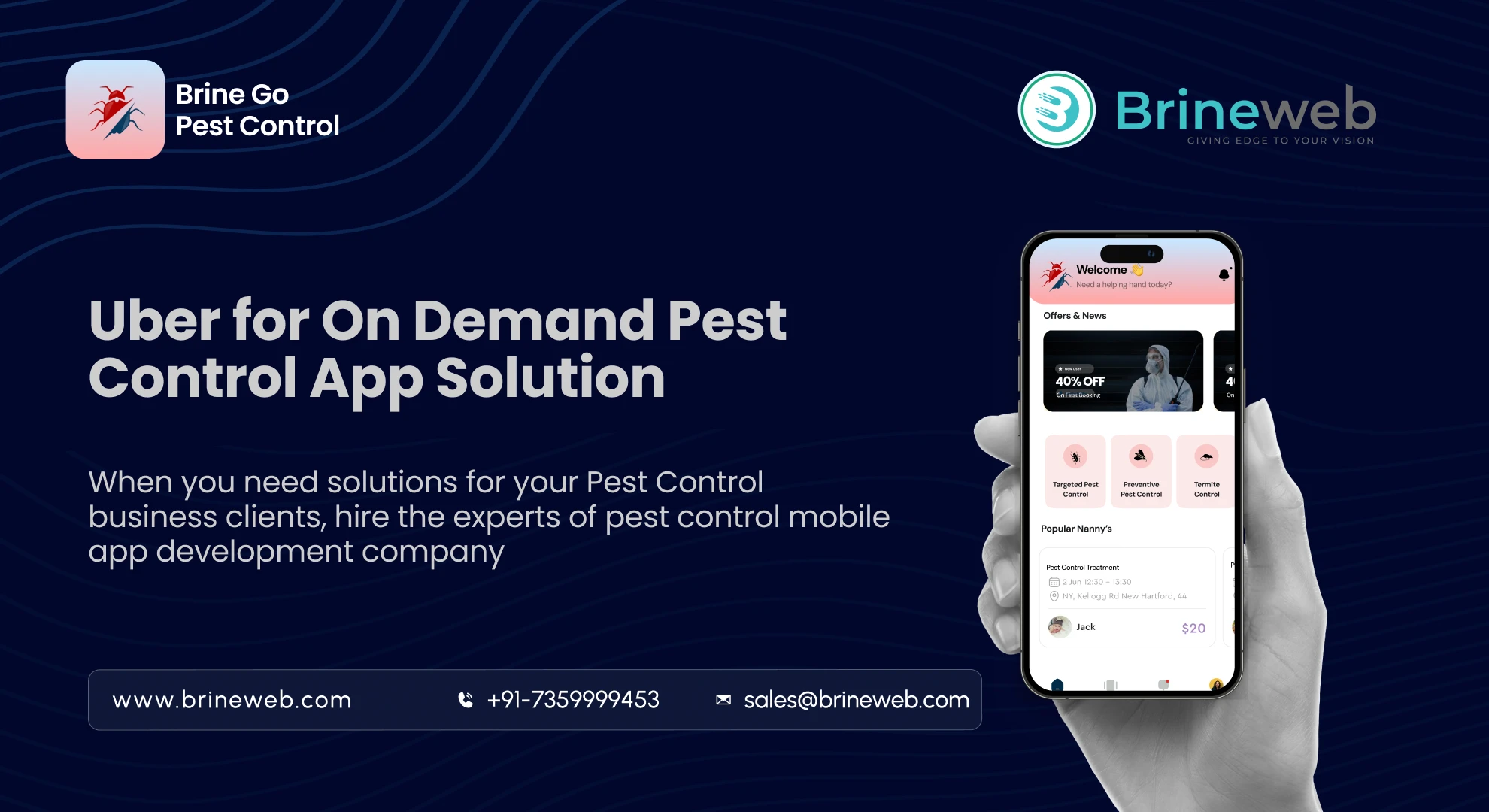
The pest control industry is shifting. Customers demand transparency, businesses want automation, and operations need smarter tools. A custom pest control app brings all three together.
This comprehensive guide will walk you through the steps, features, and development costs to help you launch a scalable digital product that aligns with your brand and growth goals.
1. What Is an On-Demand Pest Control App?
An on-demand pest control app allows customers to:
- book a pest control service
- choose a technician or time slot
- track the professional in real-time
- pay digitally
- access AMC plans
- download invoices instantly
Meanwhile, technicians get job assignments on their app, and the admin gets an intelligent dashboard to manage operations end-to-end.
It’s the modern upgrade every pest control business needs.
2. Why Pest Control Companies Need a Mobile App Now
Here’s the truth:
Customers judge service reliability based on the booking experience.
If your competitor offers 1-click booking while you rely on calls and WhatsApp messages, you’re already losing leads.
A mobile app helps you:
Improve customer convenience
No more calls, follow-ups, or scheduling confusion.
Enhance operational efficiency
Real-time technician tracking reduces delays and missed appointments.
Automate AMC and recurring services
This is where pest control companies make consistent revenue.
Build trust through transparency
Digital invoices, service history, technician details everything stays clean and traceable.
Stand out from competitors
Very few pest control businesses have a branded app.
That’s your opportunity.
3. Market Opportunity: Why Now Is the Best Time
- Urban households require 3–6 pest control services a year
- Commercial spaces like hospitals, warehouses & restaurants require monthly contracts
- Customers prefer vendors with real-time tracking & digital documentation
- Digital-first service businesses grow 30% faster, according to industry data
If you’re thinking about launching an app, 2026 is the right time.
4. Essential Features of a Pest Control App
A successful pest control app needs three components:
Customer App, Technician App, and Admin Portal
Let’s break them down.
Customer App Features
1. Easy booking and scheduling
Clear UI for service selection, date, and slot choosing.
2. Real-time technician tracking
The most demanded feature boosts customer trust immediately.
3. Secure payments
UPI, cards, wallets, NetBanking.
4. AMC subscription management
Customers can buy, renew, or manage annual service plans.
5. Service history & invoice downloads
A professional must-have for both residents and corporates.
6. Ratings & reviews
Improves accountability and helps retain top performers.
Technician App Features
1. Job assignment & schedule
Technicians receive jobs with full details and location.
2. In-app navigation
Route optimization to reduce travel time and fuel costs.
3. Service status updates
Start, pause, complete keeps admin and customer informed.
4. Earnings dashboard
Boosts motivation and transparency.
5. Upload service reports
Photos, notes, digital forms. no paperwork.
Admin Panel Features
- Customer & technician management
- Pricing control
- Service categories
- Analytics & performance insights
- Inventory tracking (chemicals, equipment)
- AMC contract management
- Automated reminders & notifications
This is the control room for your business.
5. Advanced Features to Outperform Competitors
If you want your app to truly stand out:
AI-based pest detection
Upload a photo → AI predicts pest type and severity.
IoT sensors for rodent/termite monitoring
For enterprise clients huge revenue opportunity.
Dynamic pricing
Adjust prices based on demand, time, or chemicals required.
Digital signatures
For strict compliance companies (food factories, hospitals).
6. Tech Stack for Pest Control App Development
Here’s the ideal stack used by modern dev teams:
Mobile App:
Flutter or React Native, Kotlin, Swift (fast, scalable, single codebase)
Backend:
Node.js or Laravel
Database:
MySQL or MongoDB
Admin Panel:
React.js / Vue.js
Integrations:
- Google Maps
- Paypal/Stripe
- Firebase (notifications)
- Twilio/SMS gateways
7. Step-by-Step Development Process
Drawing from both app development experience & sales psychology, here’s how real projects succeed:
Step 1: Requirement & competitor analysis
Understand your USP and market position.
Step 2: Wireframes & UX design
User experience is the deciding factor between uninstall vs loyalty.
Step 3: Backend setup & architecture
Ensures scalability especially if you're targeting multi-cities.
Step 4: Mobile app development
Parallel work on customer & technician apps.
Step 5: Admin panel development
Your internal team will use this daily needs to be intuitive.
Step 6: Integrations
Payment, SMS, maps, analytics, notifications.
Step 7: Testing
Performance, security, real-device testing.
Step 8: Deployment
App Store + Play Store + training for your team.
Step 9: Maintenance & scaling
Real business starts after launch.
8. Cost to Develop a Pest Control App
Based on industry standards, development structure, and the features above:
The cost depends on complexity, design, and developer location. A basic MVP (Minimum Viable Product) can cost $25,000–$75,000, covering design, app development, backend API, and testing.
A white-label clone app costs around $10,000–$25,000, ideal for startups wanting a quick launch. Custom builds, however, offer better scalability, performance, and long-term brand value.
Factors that increase cost:
- IoT integration
- AI-based pest detection
- Multi-city marketplace
- Custom enterprise CRM features
9. Monetization Models
Your app can generate revenue through:
- Service fees
- AMC subscriptions
- Commission model (if you onboard multiple technicians)
- Corporate contracts
- Featured listings
- Surge pricing during peak seasons
This isn't just a tech investment it’s a revenue generator.
10. Common Mistakes to Avoid
Learn from what many service businesses get wrong:
- Building an app without AMC automation
- Ignoring real-time tracking
- Slow or cluttered UI
- No proper admin analytics
- Weak post-launch maintenance
Your app should be a long-term business asset, not a one-time build.
11. Final Thoughts
The pest control industry is ready for digital transformation.
Whether you’re a small business, a regional service provider, or a nationwide franchise a well-built on-demand app can dramatically improve customer experience, repeat revenue, and operational efficiency.
If you’re planning to develop a modern pest control app, now is the best time.
Ready to build your pest control app? Start by conducting thorough market research, defining your unique value proposition, and choosing the development approach that best fits your budget and timeline. The future of pest control services is digital and the opportunity is yours to seize.