info@brineweb.com
 +91 73599 99453





























The way work gets done in the UAE is changing quietly, but fundamentally.
A few years ago, most services were handled through fixed contracts, agencies, or word-of-mouth recommendations. Today, a growing number of people in the UAE book cleaners, handymen, delivery drivers, beauticians, tutors, and technicians through on-demand mobile apps.
At the same time, thousands of workers are shifting away from traditional employment models toward flexible, app-based work.
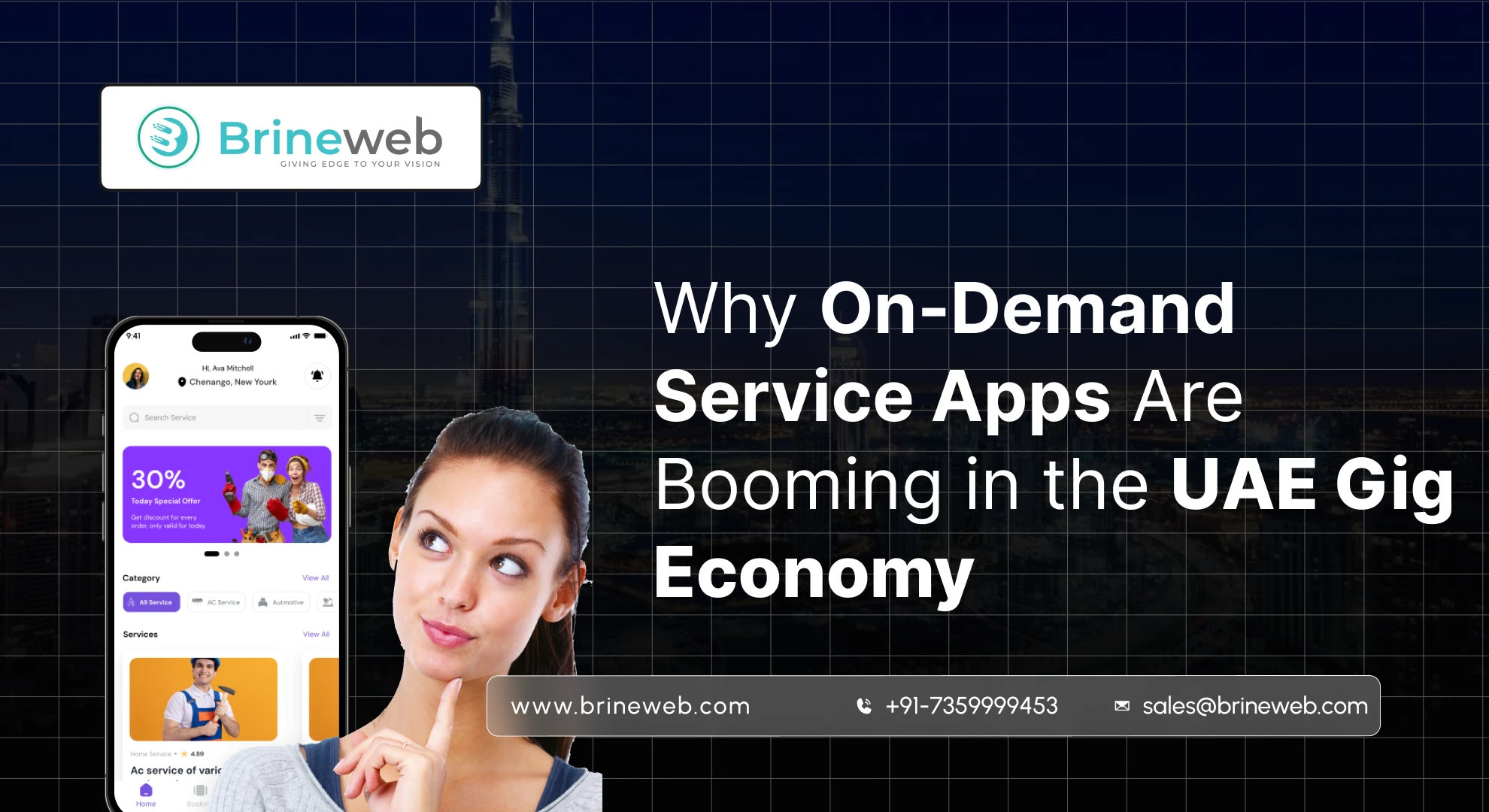
This intersection of digital platforms + flexible labor + changing consumer expectations is exactly why on-demand service apps are booming in the UAE gig economy.
Understanding the UAE Gig Economy
The gig economy refers to a labor market where work is:
-
Short-term
-
Task-based
-
Flexible
-
Often mediated through digital platforms
In the UAE, the gig economy looks slightly different from Western markets.
A UAE-Specific Gig Model
-
A large expatriate workforce
-
High demand for service roles
-
Strict regulatory frameworks
-
Strong focus on trust, verification, and compliance
Gig work in the UAE is less about side hustles and more about structured, platform-enabled service delivery.
Why the UAE Is a Perfect Market for On-Demand Service Apps
Several structural factors make the UAE one of the strongest markets for on-demand platforms.
High Smartphone Penetration
Smartphone usage in the UAE is among the highest globally.
Mobile apps are the default interface for daily tasks.
Digital Payments Adoption
Residents are comfortable using:
-
Cards
-
Wallets
-
In-app payments
This removes friction from booking and paying for services.
Urban, Time-Constrained Lifestyles
In cities like Dubai and Abu Dhabi:
-
Time is more valuable than cost
-
Convenience is a priority
-
Scheduled services are preferred
Service-Driven Economy
From home maintenance to logistics and hospitality, the UAE economy relies heavily on service professionals.
What Are On-Demand Service Apps?
On-demand service apps are platforms that:
-
Connect customers with service providers in real time
-
Allow booking, scheduling, and payment through a mobile interface
-
Manage supply, demand, and quality digitally
These apps typically include:
-
A customer-facing app
-
A service provider app
-
An admin dashboard
They act as digital marketplaces, replacing phone calls, agents, and manual coordination.
Why Consumers in the UAE Prefer On-Demand Services
Consumer behavior is one of the biggest growth drivers.
Speed and Convenience
Customers can book services in minutes instead of making multiple calls.
Transparent Pricing
Apps show prices upfront, reducing uncertainty.
Verified Professionals
Background checks, ratings, and reviews build trust.
Flexible Scheduling
Users can book:
-
Same-day services
-
Scheduled appointments
-
Recurring visits
Consistent Experience
Apps standardize service delivery, reducing variability.
For UAE residents, this predictability is essential.
Why Gig Workers Are Choosing App-Based Platforms
The boom isn’t just on the demand side.
Flexible Working Hours
Workers can:
-
Choose when to work
-
Accept or reject jobs
-
Balance multiple commitments
Reliable Job Flow
Apps provide consistent access to customers without middlemen.
Digital Payments
Fast, transparent payouts improve financial stability.
Reputation Building
Ratings and reviews help workers grow within the platform.
Reduced Dependence on Agencies
Workers rely less on informal networks or commissions-based agents.
For many, on-demand apps offer structured flexibility rather than instability.
Key On-Demand Sectors Growing in the UAE
Several sectors are seeing rapid platform adoption.
Home Services
-
Cleaning
-
Handyman
-
Plumbing
-
AC maintenance
-
Pest control
Delivery & Logistics
-
Food delivery
-
Grocery delivery
-
Last-mile logistics
Mobility
-
Ride-hailing
-
Chauffeur services
-
Roadside assistance
Beauty & Wellness
-
Salon at home
-
Massage
-
Grooming services
Healthcare & Home Care
-
Nursing services
-
Physiotherapy
-
Elderly care
These sectors share common traits: high demand, repeat usage, and fragmented supply.
How On-Demand Apps Benefit Businesses in the UAE
From a business perspective, on-demand platforms unlock several advantages.
Lower Fixed Costs
Companies can scale supply without hiring full-time staff.
Faster Market Entry
Digital platforms reduce setup and expansion time.
Scalable Workforce
Supply adjusts dynamically to demand.
Data-Driven Decisions
Apps generate insights on:
-
demand patterns
-
pricing
-
service quality
Recurring Revenue Models
Subscriptions and repeat bookings improve predictability.
The Role of Technology in Scaling On-Demand Apps
Technology is what makes the gig economy manageable at scale.
Mobile-First Architecture
Apps are built for speed, simplicity, and accessibility.
Smart Matching Algorithms
Platforms match customers with the right service provider based on:
-
location
-
availability
-
skills
-
ratings
Automation
Scheduling, payments, notifications, and support are automated.
Analytics & Reporting
Operators monitor performance in real time.
Without technology, the gig economy becomes chaotic.
Regulatory Environment in the UAE
Unlike some regions, the UAE places strong emphasis on regulation.
Licensing Requirements
Businesses must obtain proper trade licenses.
Worker Classification
Platforms must define roles clearly to comply with labor laws.
Verification & Compliance
Background checks and documentation are critical.
Payment & VAT Rules
Financial compliance is strictly enforced.
These regulations increase trust and professionalism, benefiting serious platforms.
Challenges Facing On-Demand Platforms in the UAE
Despite strong growth, challenges exist.
Quality Control
Maintaining consistent service quality across gig workers.
Worker Retention
Balancing flexibility with loyalty.
Operational Complexity
Managing supply, demand, and customer support at scale.
Competition
New platforms entering popular categories.
Regulatory Updates
Staying compliant as rules evolve.
Success requires strong operations, not just a good app.
Why the On-Demand Boom Is Sustainable in the UAE
This growth is not a short-term trend.
Demographics
A growing population and urban density drive demand.
Lifestyle Changes
More people value convenience over ownership.
Digital Maturity
Consumers trust apps with essential services.
Government Support
Smart city initiatives encourage digital platforms.
These factors suggest long-term sustainability.
The Shift from Agencies to Platforms
Traditional service agencies are being replaced by platforms that offer:
-
better visibility
-
better control
-
better accountability
Apps reduce friction for both customers and workers.
This shift mirrors what happened in:
-
ride-hailing
-
food delivery
-
accommodation
Home services and local services are following the same path.
The Role of Subscriptions in the UAE Gig Economy
Subscriptions are a major driver of platform success.
Why Subscriptions Work
-
predictable revenue
-
customer retention
-
easier workforce planning
Popular Subscription Models
-
weekly cleaning
-
monthly maintenance
-
bundled services
Subscriptions stabilize the inherently flexible nature of gig work.
How AI Is Strengthening On-Demand Platforms
Many UAE platforms are now adopting AI to:
-
improve job matching
-
predict demand
-
reduce cancellations
-
personalize recommendations
AI allows platforms to scale efficiently without increasing headcount.
What the Future Holds for On-Demand Apps in the UAE
Looking ahead, expect:
-
more specialized platforms
-
AI-driven operations
-
expansion into multi-service ecosystems
-
stronger regulation and professionalization
-
deeper integration into daily life
The gig economy in the UAE will become more structured, not less.
Opportunities for Entrepreneurs and Businesses
For founders and businesses, opportunities exist in:
-
niche service categories
-
underserved locations
-
premium service tiers
-
B2B on-demand solutions
-
subscription-based platforms
Timing matters and the market is still open.
Final Thoughts
On-demand service apps are booming in the UAE because they align perfectly with:
-
modern lifestyles
-
digital habits
-
flexible work preferences
-
service-driven demand
The gig economy here is not about instability.
It’s about efficiency, access, and structure.
Platforms that:
-
respect regulations
-
invest in quality
-
support workers
-
simplify life for customers
will continue to thrive.
The future of work and services in the UAE is not offline.
It’s on-demand, app-driven, and platform-powered.