info@brineweb.com
 +91 73599 99453




























The on-demand economy has transformed how people access everyday services, and car wash apps are becoming one of the standout categories. From doorstep cleaning to subscription-based care packages, the idea of a car wash app like is quickly becoming a profitable startup opportunity.
In this guide, you’ll learn how to develop an on-demand car wash app, understand the core features, evaluate the cost, and explore business models that work in current time.
Why an On-Demand Car Wash App Is a Great Startup Idea
The global demand for convenient, eco-friendly, and time-saving car care solutions is rising rapidly. Traditional car wash centers require time, travel, and coordination today’s customers prefer services that reach them at home or work.
Key Reasons This Market Is Growing
- Increasing vehicle ownership in urban areas
- Busy lifestyles driving demand for doorstep services
- Rising awareness of water-efficient and steam car wash methods
- Popularity of subscription-based car maintenance services
- Proven success of apps like Washos, Spiffy, and Washé Pro
On-demand car wash apps reduce friction, automate booking, and deliver a seamless customer experience making them an attractive, scalable business.
How On-Demand Car Wash Apps Work
At its core, an on-demand car wash app connects car owners with service providers for quick, scheduled, or recurring wash services.
General Workflow
- User downloads the app and logs in
- User selects wash package (basic wash, detailing, waxing, etc.)
- Chooses location, time, and vehicle type
- Wash professional accepts the request
- Service is completed at the selected location
- User pays via in-app payment
- Both sides can review and rate
This process makes it simple, transparent, and efficient for both sides.
Choosing the Right Business Model for a Car Wash App
Your business model defines how your app earns money and scales. Here are the most proven models in 2025.
1. Marketplace Model (Recommended)
A platform connects car owners with freelance or partnered car wash professionals.
Revenue: Commission per booking (10–30%).
Why it works: Highly scalable, low operational cost.
2. Dedicated Car Wash Brand
A single company provides washing services through an app.
Revenue: Per service + premium packages.
Why it works: Strong brand control and high-quality assurance.
3. Aggregator Model
Multiple car wash companies list their services on your app.
Revenue: Listing fees + commissions.
Why it works: Variety for customers, recurring revenue from partners.
4. Subscription Model
Users pay monthly or yearly for regular washes.
Revenue: Recurring subscription fees.
Why it works: Predictable cash flow and customer retention.
Core Features of an On-Demand Car Wash App
To compete effectively, your app needs features for three users: car owners, service providers, and admin.
Features for Car Owners
1. Quick Registration
Email, mobile, Google/Apple login for fast onboarding.
2. Vehicle Profile
Store details: model, number, and preferred services.
3. Explore & Book Services
Browse wash packages, pricing, service time, and technician profiles.
4. Real-Time Tracking
Track technician location and service progress.
5. Secure Online Payments
Wallet, UPI, cards, net banking, subscriptions.
6. Ratings & Reviews
Builds trust and platform reliability.
7. Order History & Invoices
Automated receipts and past service records.
Features for Car Wash Professionals
1. Profile & Verification
KYC, experience, service capabilities.
2. Accept/Reject Requests
Instant notifications for new jobs.
3. Route Navigation
Integrated maps for optimized travel.
4. Earnings Dashboard
Daily, weekly, monthly income tracking.
5. Service Status Updates
Start, ongoing, completed notifications.
Admin Panel Features
1. Dashboard Analytics
Bookings, revenue, performance charts.
2. User Management
Add, remove, verify professionals.
3. Pricing & Commission Control
Dynamic pricing, coupon management.
4. Dispute Management
Refunds, complaints, order issues.
5. Reports & Insights
Business intelligence for scaling decisions.
Advanced Features That Make Your App Stand Out
To compete with apps like Washe or Spiffy, consider offering advanced functionalities.
1. Waterless or Eco-Wash Options
Eco-friendly packages attract new-age users.
2. Subscription Plans
Weekly/Monthly/Quarterly wash plans.
3. Real-Time Technician Tracking
High-precision GPS improves trust and transparency.
4. In-App Chat & Voice Notes
Easy communication between users and professionals.
5. Fleet Management Module
For business clients or taxi companies.
6. Push Notifications & Offers
Boost engagement and repeat bookings.
7. Multi-City & Multi-Vendor Support
Ideal for scaling into new markets.
8. Loyalty & Rewards Program
Encourage frequent usage.
Step-by-Step Process to Develop an On-Demand Car Wash App
Here’s a breakdown of how to build a car wash app from concept to launch.
1. Market Research & Competitor Analysis
Study demand, pricing, and popular app features in your target region.
2. Define Your Business Model
Choose between marketplace, aggregator, or dedicated service.
3. Create a Feature Roadmap
Start with MVP features; expand later.
4. UI/UX Design
User-friendly, clean design for a smooth booking experience.
5. Mobile App Development
Native or cross-platform (Flutter/React Native).
6. Backend & API Development
Scalable architecture to handle bookings, payments, and tracking.
7. Payment & Map Integration
Integrate Stripe/Razorpay + Google Maps/Apple Maps.
8. Testing & Quality Assurance
Functionality, security, usability, and real-device testing.
9. Launch & App Store Submission
Prepare screenshots, descriptions, and metadata.
10. Post-Launch Marketing
SEO, ads, partnerships, local promotions.
Technology Stack for Car Wash App Development
Frontend
- Flutter
- React Native
- Swift (iOS)
- Kotlin (Android)
Backend
- Node.js
- Laravel
- Python (Django)
Database
- MongoDB
- MySQL
- Firebase
APIs
- Google Maps API
- Payment Gateway API
- SMS/Email Notifications
Cost to Develop an On-Demand Car Wash App
Development cost depends on features, complexity, and region.
The cost depends on complexity, design, and developer location. A basic MVP (Minimum Viable Product) can cost $15,000–$60,000, covering design, app development, backend API, and testing.
A white-label clone app costs around $10,000–$25,000, ideal for startups wanting a quick launch. Custom builds, however, offer better scalability, performance, and long-term brand value.
What Affects the Cost?
- Number of user roles (owner, provider, admin)
- GPS + map tracking complexity
- Subscription & commission management
- UI animations and custom designs
- Backend scalability and server load
- Integration with payment gateways
A smart approach is to launch with an MVP, validate user demand, and scale based on feedback.
Monetization Strategies for Car Wash Apps
1. Commission per Booking
The most common revenue model.
2. Subscription Plans
Monthly or yearly wash packages..
3. Surge Pricing
High-demand days or peak hours.
4. Featured Listings
Service providers pay for top positions.
5. Advertising
Partner with auto-accessory brands.
6. Convenience Fees
Extra earnings from express bookings.
Challenges in Building a Car Wash App (and Solutions)
1. Acquiring Skilled Technicians
Solution: Offer better payouts and incentives.
2. Ensuring Service Quality
Solution: Strict onboarding, training, and reviews.
3. Managing Cancellations & Delays
Solution: Flexible scheduling + penalty rules.
4. Scaling Across Cities
Solution: Cloud-based backend + multi-city support.
Marketing Strategies to Grow Your Car Wash App
1. Local SEO Optimization
Target keywords like “car wash near me” + city name.
2. Referral Programs
Reward users for inviting friends.
3. Social Media Content
Before/after wash videos, reels, and customer stories.
4. Partnerships
Work with real estate groups, corporate offices, and parking facilities.
5. Paid Ads
Google Ads + Facebook/Instagram targeted ads.
Ready to Launch Your On Demand Car Wash App?
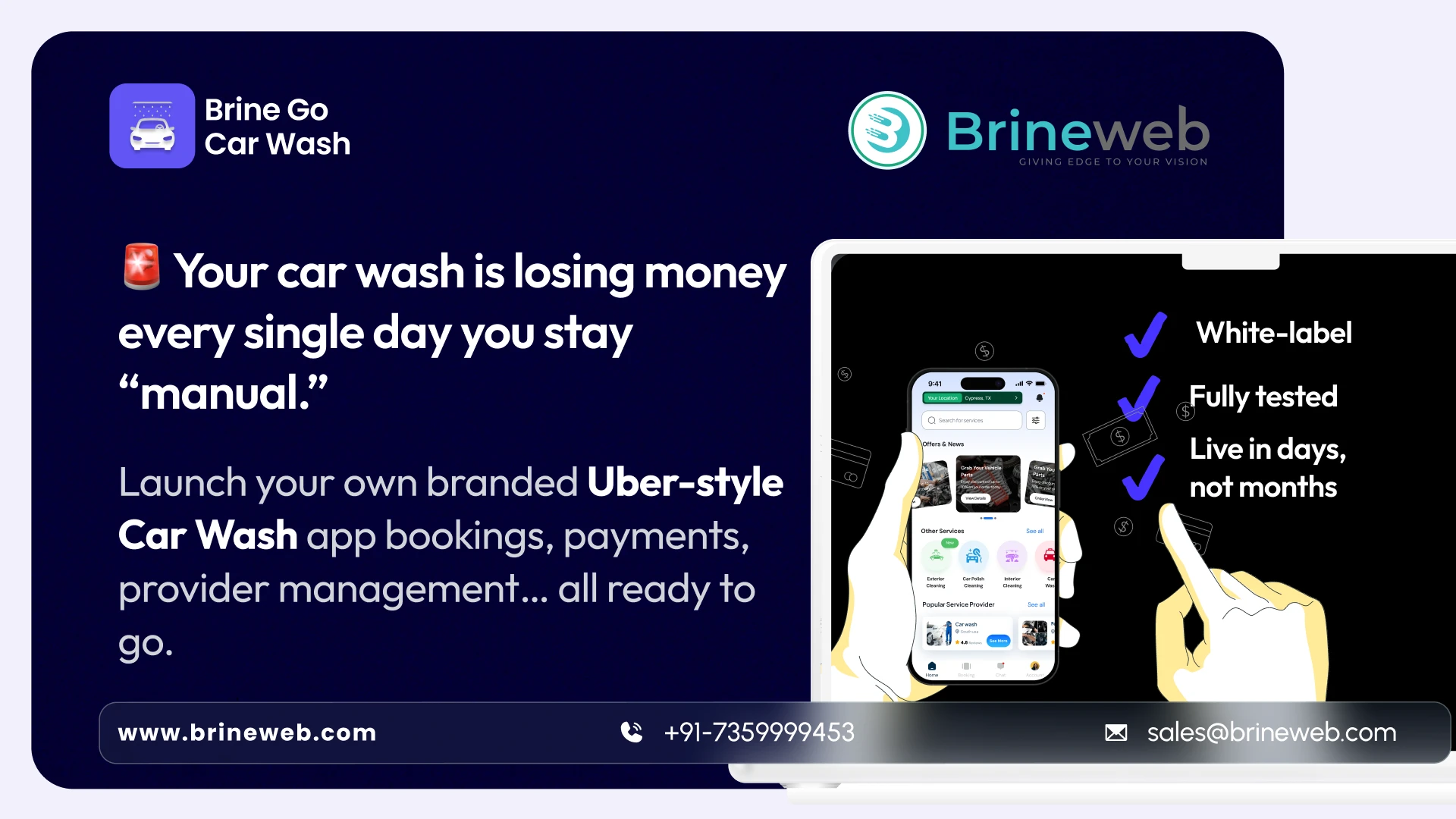
Whether you’re building a new car wash tech startup or expanding an existing car wash brand, Brineweb can help you launch a high-quality, scalable, and revenue-ready on demand car wash platform with ease.
Conclusion
Developing an on-demand car wash app provides a massive opportunity in a fast-growing service industry. Whether you follow the marketplace model or build your own car wash brand, success depends on user experience, reliability, and smart scaling.
By understanding the features, cost, business model, and development process, you can build an app that stands out in current market and beyond.