info@brineweb.com
 +91 73599 99453






























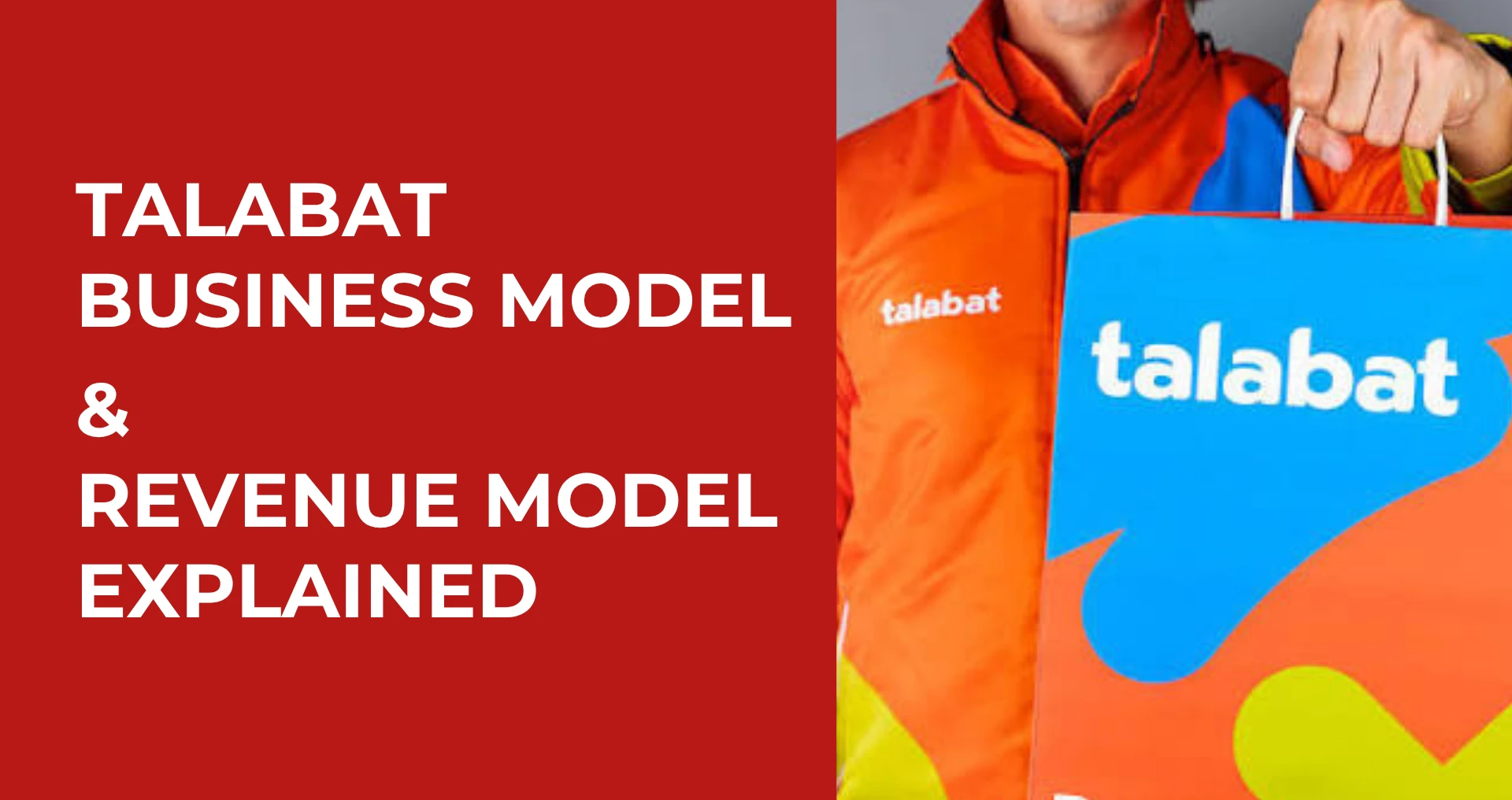
Talabat is the Middle East and North Africa's leading on-demand delivery platform, operating across 9 countries with an estimated 55 to 60% market share in the GCC online food delivery market. It earns through restaurant commissions, customer delivery fees, Talabat Pro subscription memberships, Talabat Mart dark store grocery margins, and in-app advertising from restaurant and brand partners.
In Q1 2025, Talabat revenue increased 34% year on year to $846 million. Full year 2025 EBITDA hit $615 million, driven primarily by grocery expansion and subscription growth. Talabat Pro now drives nearly half of the platform's total GMV. The company listed on the Dubai Financial Market in December 2024, raising $2 billion in the UAE's largest IPO of 2024 at a $10 billion valuation.
This is the full story of how Talabat works, how it makes money, and what founders building in the Middle East delivery market can take from its model.
What Is Talabat?
Talabat was founded in Kuwait in 2004 by Abdulaziz Al Loughani, making it one of the earliest food delivery platforms anywhere in the world. It launched before smartphones existed, operating initially through a website where Kuwaiti residents could browse restaurant menus and place orders online.
Delivery Hero acquired Talabat in 2015 for $170 million. Under Delivery Hero's ownership, Talabat expanded from Kuwait across the GCC and broader MENA region, covering UAE, Saudi Arabia, Bahrain, Qatar, Oman, Jordan, Iraq, and Egypt. Today it operates in 9 countries with 160,000+ delivery partners and 7.5 million monthly active users as of Q3 2025, up 23% year on year.
The December 2024 IPO on the Dubai Financial Market gave Talabat its own listing at a $10 billion valuation, separating it from Delivery Hero's broader corporate structure and establishing it as an independent publicly listed entity in the Middle East market it dominates.
Today Talabat is not just a food delivery app. It is a multi-vertical delivery platform covering restaurants, groceries through Talabat Mart, pharmacies, and convenience. Its machine learning models cross-sell verticals and introduce services like Talabat Pro and Talabat Rewards at precisely the right moment in each customer's journey.
What Is Talabat's Business Model?
Talabat operates a three-sided marketplace connecting three groups through a single platform.
Customers use the Talabat app to browse thousands of restaurants and stores, place orders, pay digitally or by cash, and track deliveries in real time. Talabat's personalisation engine surfaces relevant restaurants, promotions, and grocery options based on past order history, time of day, and location.
Restaurant and merchant partners list their menus and products on Talabat, paying commission on every order in exchange for access to Talabat's customer base and delivery infrastructure. Over 50,000 restaurant and store partners operate across Talabat's 9 markets.
Delivery partners receive job notifications through the Talabat rider app, accept deliveries, navigate using in-app GPS, and complete last-mile fulfilment. The 160,000+ rider fleet is Talabat's largest operational asset and its most important quality variable.
Talabat sits at the centre managing matching, payments, routing, quality control, and all the technology infrastructure that makes each transaction work. It earns from multiple sides of every transaction.
How Talabat Works: The Full Order Flow
Open the Talabat app. Enter your address. Browse restaurants sorted by cuisine, rating, delivery time, or promotional offers. Talabat's algorithm personalises the display based on your order history and current demand patterns.
Select a restaurant, choose your items, customise where available, and proceed to checkout. You see a full cost breakdown before confirming subtotal, delivery fee, and service charge. Payment options include credit and debit cards, cash on delivery, digital wallets, and Talabat wallet balance.
The restaurant receives the order on its Talabat merchant dashboard. Preparation begins. Simultaneously, Talabat's dispatch algorithm assigns the nearest available delivery partner, calculating pickup timing to synchronise with when food will be ready. Dynamic pricing adjusts delivery fees in real time based on distance, demand, and weather conditions.
The delivery partner picks up the order, confirms it in the rider app, and delivers to your door with GPS navigation. You track the delivery live from the moment the rider picks up. After delivery, both parties rate the experience. Restaurant ratings directly affect search visibility. Rider ratings affect job priority.
Talabat's Revenue Model: How It Makes Money
1. Restaurant Commission (Primary Revenue)
Talabat charges restaurant partners a commission on every completed order, typically ranging from 15% to 30% depending on the market, restaurant category, and the service tier selected. This commission is Talabat's largest single revenue source.
In exchange, restaurants get access to Talabat's 7.5 million monthly active users, a complete delivery fleet they do not manage, payment processing, and analytics tools. For restaurants without delivery capability, Talabat provides the entire logistics solution. For those with their own drivers, Talabat provides customer acquisition and order management only.
Commission rates in the GCC tend to run at the higher end of global norms because the market's high per-capita income supports restaurant margins that can absorb a larger platform take rate than in South or Southeast Asia.
2. Delivery Fees and Service Fees
Customers pay a delivery fee per order that fluctuates based on distance, demand, and weather conditions. Talabat uses dynamic pricing algorithms to adjust these fees in real time, ensuring the 160,000+ rider fleet stays economically incentivised during peak periods.
A service fee on top of the delivery fee applies per order, covering platform operating costs. Both fees scale naturally with order volume without proportional cost increases.
3. Talabat Pro (Subscription)
Talabat Pro is the platform's monthly subscription membership. Subscribers pay a fixed monthly fee in exchange for free delivery on qualifying orders, exclusive member discounts, and priority support. Pro users now drive nearly half of Talabat's total GMV, which is exceptional subscription penetration for a food delivery platform.
Talabat launched Pro in Egypt and Iraq during 2025, completing rollout across all 8 operational markets by the end of 2025. The 2026 plan includes incremental investment to enhance Pro value and expand its multi-vertical subscriber base beyond food into grocery and pharmacy.
The subscription mechanics here directly mirror what HungerStation built with its 10 million Pro subscribers in Saudi Arabia a subscriber who has paid monthly orders more frequently to justify the cost, generating more commission revenue per subscriber at the same acquisition cost while producing predictable recurring income.
4. Talabat Mart (Dark Store Grocery)
Talabat Mart is Talabat's quick-commerce grocery arm, operating its own dark stores stocked with grocery essentials, fresh produce, household items, and pharmacy basics for delivery in under 30 minutes like India's Blinkit Model.
Unlike the restaurant marketplace where Talabat earns only commission on third-party orders, Talabat Mart earns the full product margin on inventory it purchases directly and sells through its own dark stores. This inventory-led model improves per-order economics significantly compared to marketplace commission rates.
Talabat is planning $100 million in 2026 investment to scale its dark store network and enhance product availability. This shift toward first-party inventory mirrors exactly what Blinkit achieved in India when it transitioned from marketplace to inventory-led model in September 2025, improving per-order margins by 50 to 70 basis points immediately after the transition.
5. In-App Advertising and Sponsored Listings
Restaurants and FMCG brands pay for featured listings at the top of search results and category pages, banner placements on the home screen, and promoted positions in the discovery feed. Talabat's advertising product earns at near-zero marginal cost once the platform infrastructure exists.
Pro users who drive nearly half of GMV also generate the richest purchase behaviour data on the platform. That data makes Talabat's advertising targeting more precise and more valuable to brands as the subscriber base grows.
For 2026, Talabat is planning an additional $50 million investment in its core food segment, part of which goes toward enhancing the advertising platform and its value proposition for restaurant partners.
6. Talabat for Corporates (B2B)
Talabat serves corporate clients and enterprise accounts with managed food and delivery services for employee meals, office catering, and event logistics. Corporate accounts generate higher average order values, predictable recurring revenue, and lower churn than individual consumer accounts.
The UAE and Saudi Arabia's concentration of multinational corporations, government entities, and large hospitality groups creates a natural corporate account base that Talabat can serve at premium rates.
The Numbers: Talabat's Financial Performance
Talabat's financial trajectory confirms a platform that has moved decisively past the question of whether on-demand delivery can be profitable in the Middle East.
Q1 2025 revenue reached $846 million, up 34% year on year. Full year 2025 EBITDA hit $615 million, driven primarily by grocery expansion and subscription growth. The EBITDA margin for 2025 reached 6.5% of GMV.
The December 2024 IPO raised $2 billion at a $10 billion valuation, the UAE's largest IPO of 2024. FY2025 dividend of AED 1,469 million (approximately $400 million) was declared, split between October 2025 and April 2026 payments.
For 2026, Talabat guides GMV growth of 11 to 14% and revenue growth of 14 to 17%. EBITDA guidance of $510 to $540 million reflects deliberate investment in dark store scaling and Talabat Pro expansion rather than margin compression. The $150 million investment plan for 2026 allocates $100 million to dark stores and the loyalty program and $50 million to the core food segment.
Monthly active users reached 7.5 million in Q3 2025, up 23% year on year. The platform operates across UAE, Saudi Arabia, Kuwait, Bahrain, Qatar, Oman, Jordan, Iraq, and Egypt.
Talabat vs HungerStation: The GCC Duopoly
Talabat and HungerStation together dominate the GCC food delivery market. Talabat holds an estimated 55 to 60% of the GCC market. HungerStation, backed by Delivery Hero and focused primarily on Saudi Arabia, holds the majority of the Saudi market specifically.
The geographic split is clear. Talabat is the dominant platform in UAE, Kuwait, Qatar, Bahrain, and Oman. HungerStation leads in Saudi Arabia, which is the largest single food delivery market in the GCC by population and revenue.
The strategic difference is also clear. HungerStation built its competitive moat through Clubcard-style loyalty data and a medical content-like SEO strategy, owning the moment Saudi consumers first search for a meal or restaurant. Talabat built its moat through geographic breadth across 9 markets and a subscription penetration rate, with Pro users driving nearly half of GMV, that is exceptional by any global standard.
Both are Delivery Hero subsidiaries, which means they share technology infrastructure, logistics expertise, and procurement scale while competing for different geographic markets within the MENA region.
What Founders Building in Middle East Delivery Can Take From This
Local cultural adaptation is not optional. Talabat survived and thrived in markets where global giants like UberEats struggled to build relevance. Arabic and English interfaces, cash on delivery workflows, culturally appropriate marketing during Ramadan, and local cuisine-first restaurant selection all contributed to retention that a generic global platform couldn't match. In any market, the platform that feels local wins over the one that feels imported.
Subscription penetration at 50% of GMV is the model to aspire to. When Pro users drive nearly half of Talabat's total GMV, the platform has effectively converted its highest-value customer segment into a recurring revenue base. That's not a discount program. It's a loyalty architecture. Build your subscription so that the value is real enough that users feel the pain of not being subscribed.
Dark store grocery is the margin expansion play. Talabat Mart investing $100 million in 2026 to scale dark stores is not a side bet. It's the recognition that first-party inventory earns better margins than marketplace commission and creates an operational moat that a restaurant-only competitor cannot build quickly. If you're building in food delivery, plan your grocery vertical from day one.
An IPO is a product distribution strategy. Talabat's December 2024 Dubai listing was not just a liquidity event. It raised brand awareness among the UAE's large retail investor community, created a local stakeholder base with financial interest in the platform's success, and gave Talabat independent capital raising capability separate from Delivery Hero's group finances. In markets where consumer trust in locally-listed companies is high, a regional stock listing is a genuine brand building move.
For founders building a food or grocery delivery platform in the Middle East, our delivery app development platform gives you a production-ready foundation covering customer app, delivery partner app, restaurant or merchant dashboard, live order tracking, Arabic and English interface, regional payment integration, and admin console.
Challenges Talabat Faces
Deliberate margin compression in 2026. Talabat's 2026 EBITDA guidance of $510 to $540 million is below 2025's $615 million. This is intentional, reflecting a choice to invest $150 million in dark store and loyalty program expansion ahead of returns. Investors who bought at the IPO valuation are watching closely to see whether 2026 investment produces 2027 margin recovery.
Quick commerce competition intensifying. Noon, InstaShop, and regional logistics players are all investing in the same dark store quick commerce infrastructure that Talabat Mart is scaling. The race to build dark store density in Dubai, Riyadh, and Kuwait City is capital-intensive and the winner will be determined by who builds the most precise demand forecasting and the fastest fulfilment.
Cross-border regulatory complexity. Operating across 9 MENA countries means managing different VAT frameworks, food safety regulations, labour laws for delivery partners, and data localisation requirements simultaneously. Each regulatory change in any single market creates compliance overhead.
Driver welfare and gig classification. The UAE, Saudi Arabia, and Jordan are all developing gig economy frameworks that may increase delivery partner protections and cost obligations for platforms. Talabat's 160,000+ rider fleet makes it a primary target for any regulatory change in this area.
The Future of Talabat
Talabat's strategy for 2026 and beyond is built on three pillars.
Grocery and quick commerce at scale. The $100 million dark store investment in 2026 is the most significant strategic commitment Talabat has made since its IPO. Grocery is a higher-frequency, higher-basket-value category than restaurant food. A customer who orders groceries twice a week through Talabat Mart plus restaurant food twice a week is worth significantly more than a restaurant-only user.
Talabat Pro multi-vertical expansion. Moving Pro benefits beyond food into grocery, pharmacy, and convenience strengthens the subscription value proposition and increases the proportion of Talabat's GMV flowing through its most loyal, highest-frequency customer segment.
Super app evolution. Talabat is watching the same super-app playbook that Gojek executed across Southeast Asia and that Careem is building in the broader Middle East. A platform that handles rides, food, grocery, pharmacy, and payments from one account for one customer generates compounding retention that any single-vertical competitor cannot match. Talabat's 2026 roadmap moves deliberately in this direction.
Ready to Build Your Own Delivery Platform?
Talabat built the GCC's dominant food delivery platform by doing three things consistently well understanding local consumers better than global competitors, building subscription loyalty before it was fashionable in the region, and investing in grocery infrastructure before the competition recognised quick commerce as a strategic category.
You don't need a $10 billion IPO to apply the same principles at a smaller scale in your own market.
Brineweb's delivery app development platform gives you a production-ready foundation for food, grocery, pharmacy, and on-demand delivery. Customer app, delivery partner app, restaurant or merchant dashboard, live order tracking, payment processing, and admin console, all configurable for Middle Eastern and global markets.
Get a free quote from Brineweb and find out what it costs to launch your delivery platform.