info@brineweb.com
 +91 73599 99453























How Bolt makes money
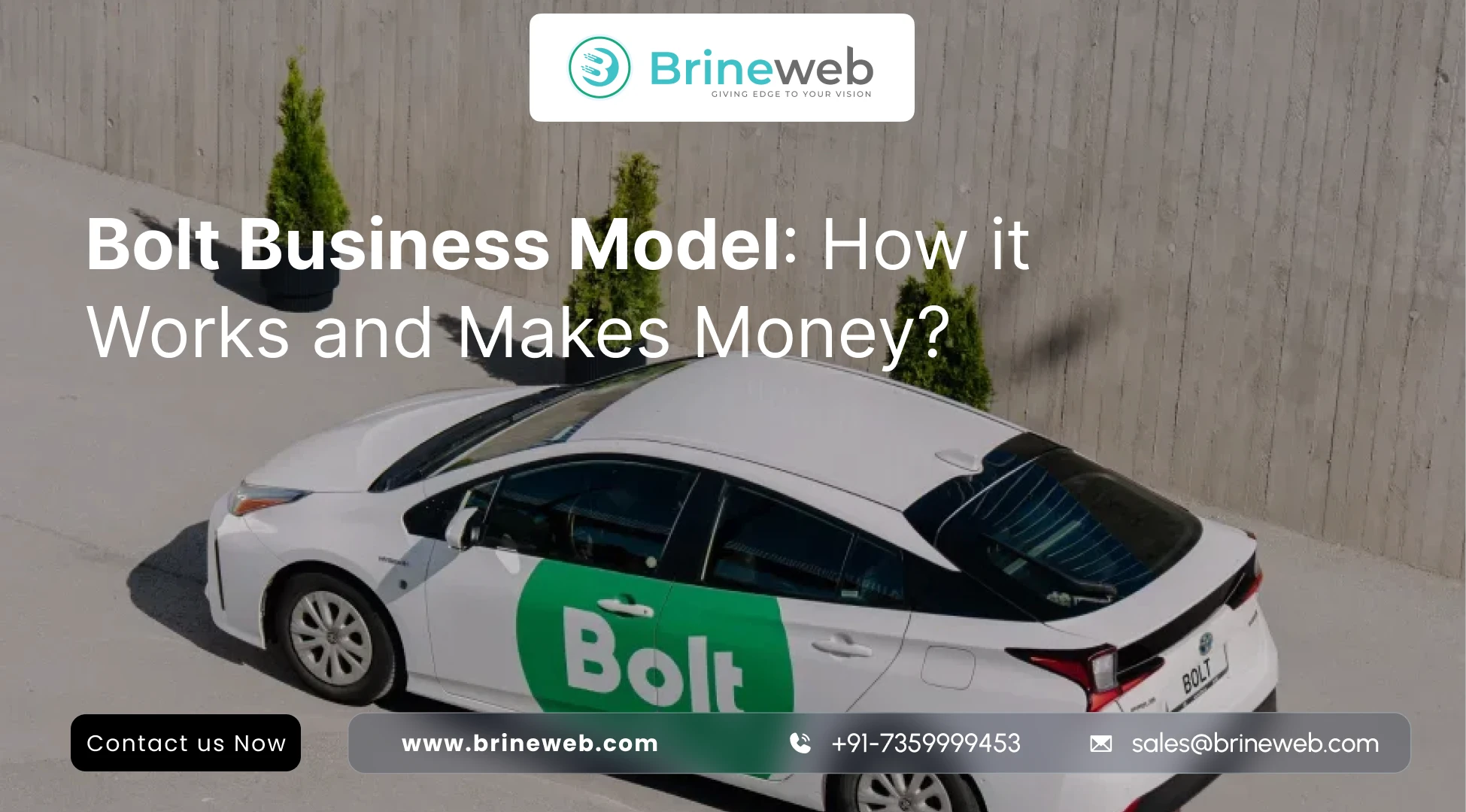
Bolt earns through ride commissions of 15 to 25%, restaurant commissions on Bolt Food, delivery fees, Bolt Market grocery margins, micromobility rental fees, Bolt Drive car sharing, Bolt Business corporate accounts, and subscriptions.
From a €5,000 Family Loan to €3 Billion
Markus Villig was 19 years old and still in high school in Tallinn, Estonia when he built the first version of what became Bolt. His family lent him €5,000. He personally recruited drivers from the streets of Tallinn in 2013.
That became Taxify. Then Bolt. Now it operates in 850 cities across 50 countries, serves 200 million customers, runs a driver and courier network of 4.5 million, and hit a €3 billion revenue run rate by December 2025. The valuation sits at €6.3 billion following a secondary share sale in 2025, down 14% from its 2022 peak of €8.4 billion.
In 2024, Bolt reported €1.99 billion in revenue, up 17% year on year. Net loss deepened to over €102 million. Revenue growth is strong. Full profitability is still being chased. IPO preparation is underway for a late 2026 or 2027 window.
What Bolt Actually Is
Bolt is Europe's second largest mobility platform and the market leader across several African and Central Asian countries.
It offers five services from one app. Bolt Rides for car and motorbike hire. Bolt Food for restaurant delivery. Bolt Market for grocery delivery from dark stores. Bolt Drive for short term car rental. And Bolt Business for corporate travel management.
That multi-service model is what separates Bolt from a standard taxi app. A user who hails a ride today, rents a scooter tomorrow, and orders lunch through Bolt Food next week generates far more value for the platform than a ride-only customer.
How Bolt Works
Passengers open the app, select a service category, choose a car type and confirm the trip. Bolt's algorithm matches the nearest available driver. Live tracking shows the route. Payment processes automatically after the trip. Both parties rate each other.
Drivers see jobs through the driver app. They accept, navigate, complete, and get paid weekly. No waiting for a monthly paycheck. That weekly payment cycle is a deliberate driver acquisition tool.
Couriers handle food and grocery deliveries through the same app. Dark store pickers handle Bolt Market orders separately.
Revenue Streams
1. Ride Commission
Bolt charges drivers 15 to 25% per completed ride. That is deliberately below Uber's 25 to 30%. Lower commission attracts more drivers. More drivers means faster pickup times. Faster pickup wins riders.
Ride hailing made up 82% of Bolt's total revenue in 2024 and around 65% by late 2025 as other verticals grew. At €1.99 billion total 2024 revenue, that's roughly €1.3 to €1.6 billion from rides alone.
2. Bolt Food
Restaurants pay Bolt a commission of 20 to 30% per order. Customers pay delivery fees and service charges on top. Bolt Food contributed roughly 20% of group revenue in 2025. Delivery volumes grew 35% year on year in key markets like Kenya and Poland.
The platform uses the same courier network as ride hailing, which improves driver utilisation during off-peak ride hours and reduces marginal cost per delivery.
3. Bolt Market
Bolt Market delivers groceries and household essentials in 15 to 30 minutes from around 200 micro-warehouses across 10 European countries. It earns through product markups and delivery fees. Some Tallinn deliveries run on autonomous sidewalk robots.
The dark store model Bolt Market runs mirrors what Blinkit built in India and what Swiggy's Instamart is building across Indian cities. Pre-positioned inventory, fast delivery, and direct margin control instead of marketplace commissions.
4. Micromobility
Bolt charges unlock fees plus per-minute rates for e-scooters and e-bikes across 260 European cities. The fleet runs on custom Bolt 6 generation scooters built for longer lifespan, which reduces capital cost per ride compared to buying off-the-shelf units.
Scooters are integrated into public transport apps in Oslo and Berlin, giving Bolt visibility to transit users who might not otherwise open the Bolt app. That distribution partnership reduces customer acquisition cost in those cities.
5. Bolt Drive
Short-term car rental by the hour or day in select European markets. Earns rental fees directly. Higher margin than ride hailing because no driver payout is involved. Bolt Drive targets the gap between Uber and traditional car rental, short trips that cost too much to taxi but don't justify a full day's car hire.
6. Bolt Business
Bolt Business serves over 50,000 companies across 50 countries. Zero subscription fee. Companies pay only for rides taken, with centralised billing, cost controls, guest booking, and integrations with SAP Concur, Expensify, Rydoo, and Zoho Expense.
The corporate segment grew 25% year on year. Corporate accounts generate higher lifetime value and more predictable revenue than individual riders. Once a company integrates Bolt into its expense management system, switching costs are real.
This is the same B2B strategy that made Cabify generate 30% of its revenue from corporate accounts and that drives Grab's corporate platform across Southeast Asia. B2B travel is high margin and low churn.
7. Subscriptions
Bolt Pass, available in select markets, gives riders discounted fares or free scooter unlocks for a monthly fee. Subscribers order more often to justify the payment. Predictable monthly income. Lower churn than pay-per-ride customers.
8. Advertising
Bolt sells in-app placements to restaurant and brand partners. High-margin at near zero marginal cost once the platform exists. Grows naturally with user base.
Bolt vs Uber
Bolt's core pitch is simple. Lower commission for drivers. Lower fares for riders. Same quality.
In practice it's Europe and Africa versus Uber's global strength. Bolt leads in several Eastern European cities, multiple African countries, and has real share in the UK and South Africa. Uber leads in Western Europe and globally.
The Lyft acquisition of Freenow and Gett in 2025 reshaped the European competitive map. Bolt is now sandwiched between Uber above and the Lyft-backed platforms around it. That pressure is exactly why Bolt's IPO and profitability timeline matter so much in 2026.
inDrive operates below Bolt on commission, using a bidding model at 6 to 12% take rates. Where inDrive is strongest, in price-sensitive emerging markets, Bolt competes on brand trust and service breadth rather than price alone.
Growth Strategy
Lower commission to win drivers. Bolt's 15 to 25% rate versus Uber's 25 to 30% is a deliberate market entry and retention tool. More drivers means faster pickups. Faster pickups wins riders. This is a compounding supply-side investment.
Africa and emerging markets. Bolt leads in several African and Central Asian markets where Uber has limited coverage. Lower customer acquisition costs and higher take rates in some regions improve unit economics compared to saturated European cities.
EV transition. Bolt targets 50% of its European fleet as EV by 2025 and full carbon neutrality by 2040. It partnered with M-KOPA to finance battery-swappable e-motorbikes for drivers in Kenya. EV fleet expansion improves environmental credentials, wins corporate clients with sustainability policies, and reduces driver fuel costs which supports retention.
Autonomous vehicles. Bolt partnered with Stellantis to develop Level 4 driverless vehicles for commercial operations across Europe. Target: 100,000 autonomous vehicles on the Bolt platform by 2035. Limited trials start in European cities in 2026. This is a decade-long play, not a near-term revenue line.
Lyft acquisition win. Lyft acquired Freenow and Gett. On paper this adds a well-funded competitor in Europe. In practice it consolidates the market away from smaller operators and pushes riders toward the bigger platforms. Bolt is one of those bigger platforms.
Challenges
Profitability gap. Revenue grew 17% in 2024. Net loss deepened to over €102 million. Positive operating cash flow of €53 million confirms the core business generates cash. Net profit requires more scale in high-margin segments like Bolt Drive and Bolt Business.
EU Platform Work Directive. Could force Bolt to reclassify drivers as employees by 2026. That raises labour costs by up to 30%. Bolt lost a UK Employment Tribunal in November 2024. Around 10,000 drivers were ruled workers, not self-employed. That decision covers minimum wage and holiday pay entitlements.
Competition density. Uber is not going anywhere. The Lyft-Freenow-Gett combination creates a larger rival in Europe. DoorDash buying Wolt tightens food delivery competition. Bolt needs its multi-service ecosystem to hold users across verticals even when individual vertical pricing is undercut.
What Founders Can Take From Bolt
Lower commission is a market entry weapon. Bolt entered cities at 5% below Uber's commission rate. Drivers switched. Faster supply attracted more riders. That flywheel spun without advertising spend. Read how Rapido used a flat subscription model instead of commission to achieve the same driver loyalty effect in India.
Multi-service compounds user value. Bolt Food, Bolt Market, and Bolt Drive all run on the same user account. A rider who engages with three services generates three times the data, three times the ad surface, and far lower churn than a single-service user. Build your platform architecture to support multiple services from day one, even if you only launch one.
B2B corporate accounts are your most durable revenue. 50,000 companies in 50 countries use Bolt Business. Corporate clients integrate Bolt into expense systems and stay. The taxi app revenue model guide covers how to build the corporate B2B layer alongside your consumer product.
EV positioning opens new doors. Corporate clients with sustainability mandates seek zero-emission fleets. An EV-only tier on your platform earns premium rates. Our EV taxi business guide covers exactly how to build and finance that fleet.
When you're ready to build, our clone app vs custom development guide helps you decide how fast to move to market.
Build Your Own Platform
Bolt grew from a street-level driver recruitment operation in Tallinn to Europe's second largest mobility platform in 12 years. The model is replicable at smaller scale. Pick a city. Undercut the dominant platform on commission. Build corporate accounts. Add services on top of a proven driver base.
Brine Go by Brineweb gives you a white-labeled ride-hailing platform with passenger app, driver app, real-time GPS, corporate accounts, dynamic pricing, and admin console. Launch in weeks.
Get a free quote from Brineweb and find out what it costs to launch your platform.